Difference between DOS and DDOS attacks
 Chan
Chan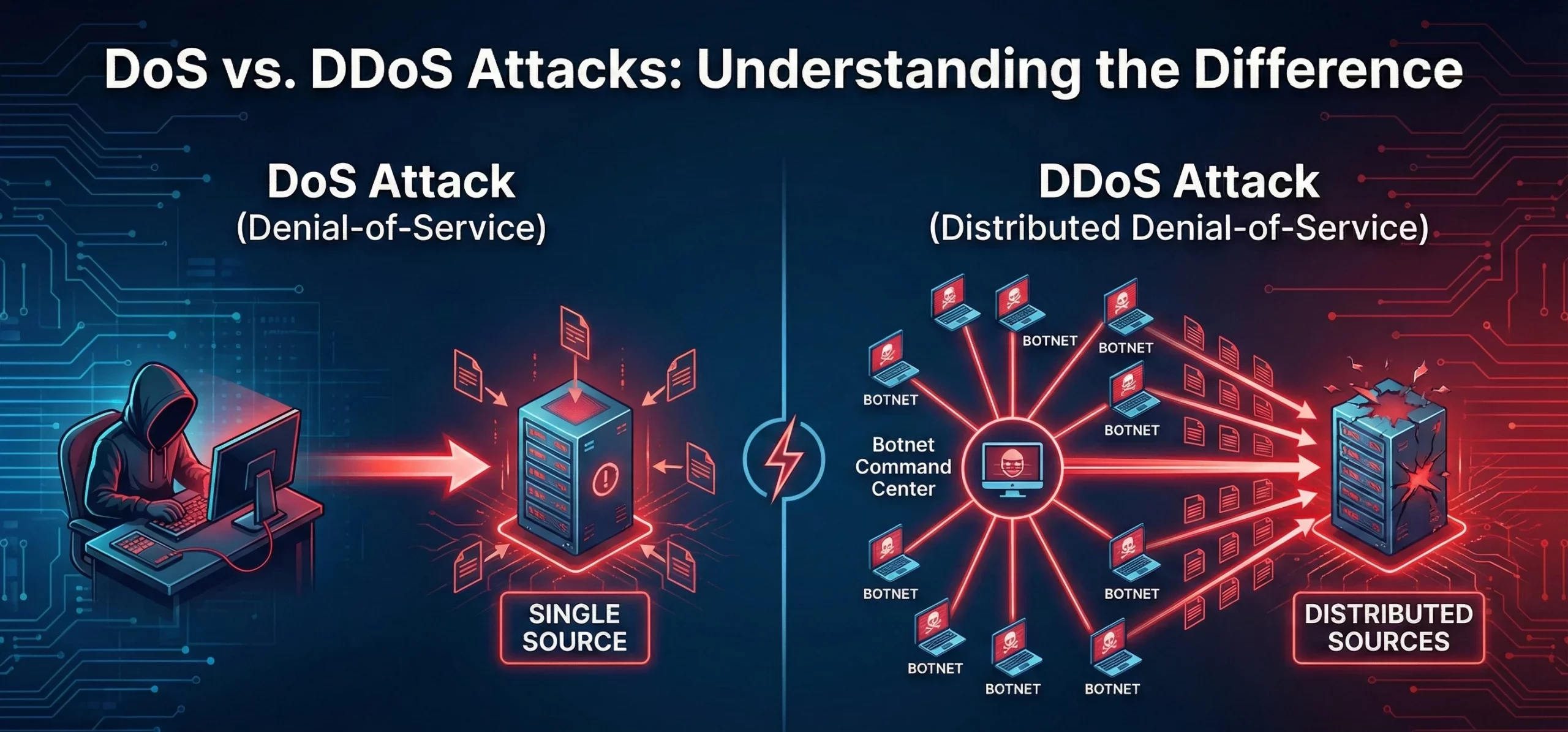
What Are DoS and DDoS Attacks?
A Denial of Service (DoS) attack attempts to make a machine, network, or service unavailable to users by overwhelming traffic or requests. It typically originates from a single source.
Table of Contents
A Distributed Denial of Service (DDoS) attack is similar in intent but involves multiple systems (often a botnet) targeting the victim simultaneously, making it harder to block or trace.
Key Characteristics of DoS & DDoS Attacks
DoS Attack
- Single source of traffic.
- Easier to mitigate due to identifiable origins.
- Lower scale and complexity compared to DDoS.
DDoS Attack
- Distributed across multiple compromised systems.
- Overwhelming scale and sophistication.
- Harder to block due to diverse traffic sources.
Commonly Used DoS/DDoS Attack Tools
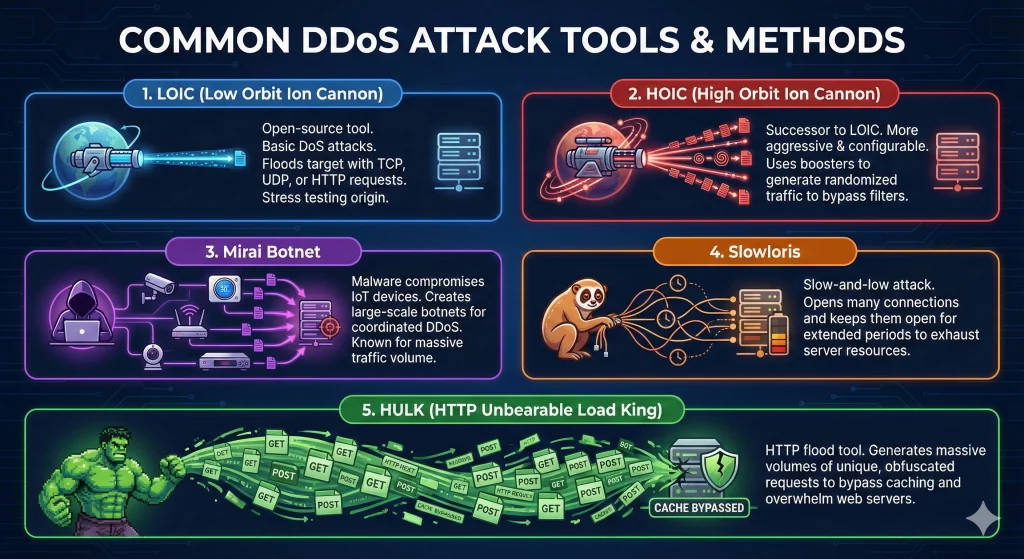
1. Low Orbit Ion Cannon (LOIC): Open-source tool used for basic DoS attacks.
2. HOIC (High Orbit Ion Cannon): Successor of LOIC, with a more aggressive and configurable attack mechanism.
3. Mirai Botnet: A malware that compromises IoT devices to launch large-scale DDoS attacks.
4. Slowloris: A tool that keeps connections open for extended periods, exhausting server resources.
5. HTTP Unbearable Load King (HULK): Generates large volumes of unique requests to overwhelm servers.
How Can I Defend Against DoS/DDoS Tools?
1. Invest in a Content Delivery Network (CDN): CDNs like Cloudflare or Akamai distribute traffic across multiple servers, mitigating attacks.
2. Use DDoS Protection Services: Services like AWS Shield and Arbor Networks detect and mitigate large-scale attacks.
3. Configure Firewalls and Rate Limits: Implement firewall rules to detect unusual traffic and rate-limiting to restrict requests from a single IP.
4. Regularly Update Systems: Keep software and systems patched to avoid vulnerabilities that attackers exploit.
5. Monitor Traffic Patterns: Use tools like Nagios or Zabbix to detect anomalies in traffic patterns early.
6. Implement Advanced Security Features: Deploy Web Application Firewalls (WAF) and Intrusion Prevention Systems (IPS) to filter malicious traffic.
DoS and DDoS Final Thought
DoS and DDoS attacks might sound like technical jargon, but understanding them is key to protecting your online world. These cyberthreats can disrupt businesses and services in a big way, but with the right tools and proactive measures, they can be managed effectively. Staying informed and prepared ensures that your digital life remains secure and running smoothly.
Trusted IPv4 Leasing for Business Growth
Get enterprise-grade IPv4 space quickly, with seamless deployment and end-to-end management.
Get Started with i.leaseRelated Posts
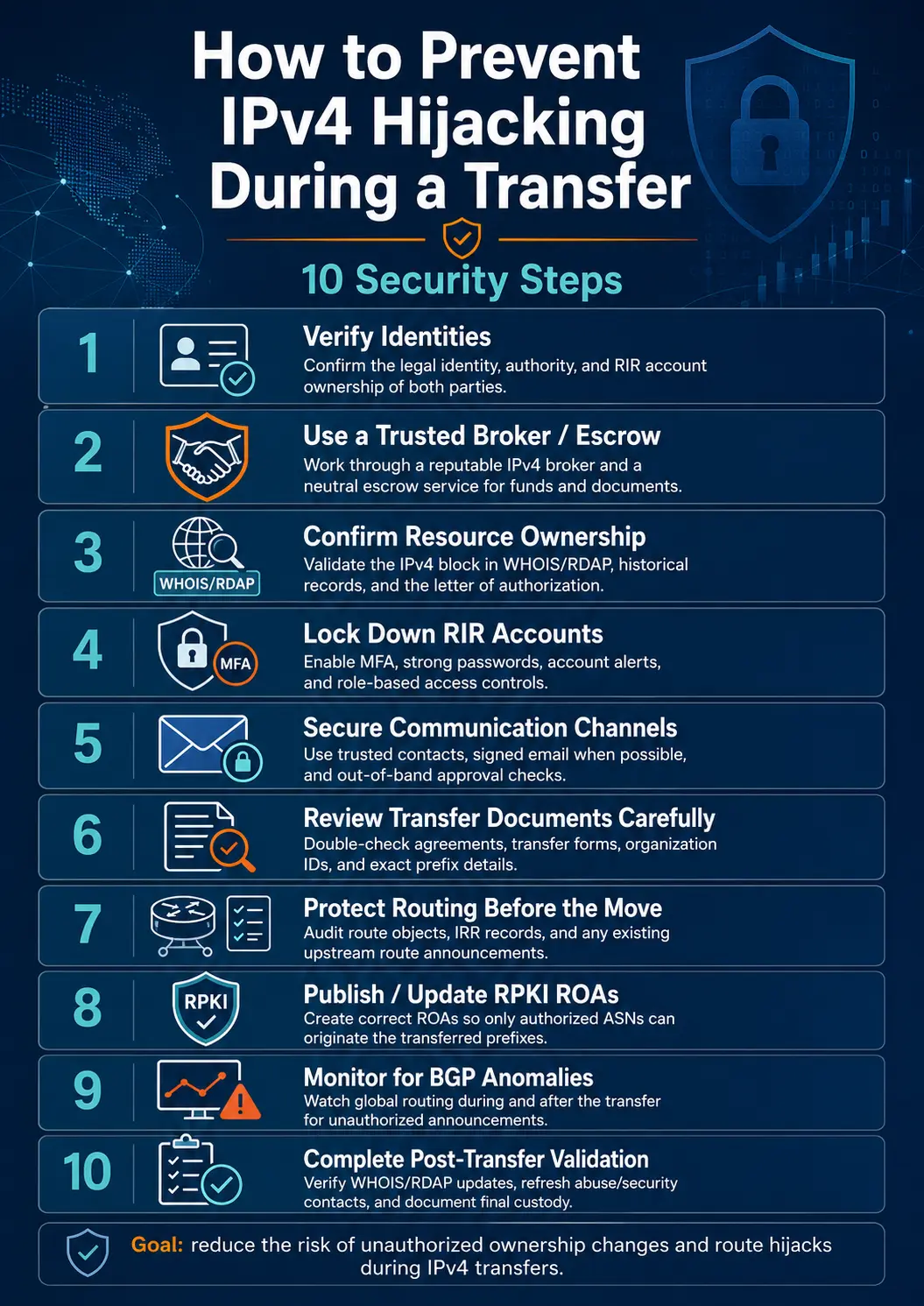
How to Prevent IPv4 Hijacking During a Transfer: 10 Security Steps
Transferring IPv4 address space is not only a commercial and registry process. It is also a sensitive routing operation. During an IPv4 transfer, control of a prefix moves from one organization to another. Registry records, Route Origin Authorizations, Internet Routing Registry objects, upstream-provider filters, reverse DNS settings, and live BGP announcements may all need to change. When these changes are completed in the wrong order—or when identity and authorizationRead more Related Posts How to Prevent IPv4 Hijacking During a Transfer: 10 Security Steps Transferring IPv4 address space is not only a commercial and registry process. It is also a sensitive routing operation. During Why the Cheapest IPv4 Lease May Cost More in the Long Run A low monthly price may look attractive during procurement, but the real cost of leased IPv4 addresses includes much more What Is a /24 IPv4 Subnet and Why Is It Popular for Leasing? A /24 IPv4 subnet is one of the most common block sizes in the IPv4 leasing market. For hosting providers, .related-post {} .related-post .post-list { text-align: left; } .related-post .post-list .item { margin: 5px; padding: 10px; } .related-post .headline { font-size: 18px !important; color: #999999 !important; } .related-post .post-list .item .post_thumb { max-height: 220px; margin: 10px 0px; padding: 0px; display: block; } .related-post .post-list .item .post_title { font-size: 16px; color: #3f3f3f; margin: 10px 0px; padding: 0px; display: block; text-decoration: none; } .related-post .post-list .item .post_excerpt { font-size: 13px; color: #3f3f3f; margin: 10px 0px; padding: 0px; display: block; text-decoration: none; } @media only screen and (min-width: 1024px) { .related-post .post-list .item { width: 30%; } } @media only screen and (min-width: 768px) and (max-width: 1023px) { .related-post .post-list .item { width: 90%; } } @media only screen and (min-width: 0px) and (max-width: 767px) { .related-post .post-list .item { width: 90%; } }
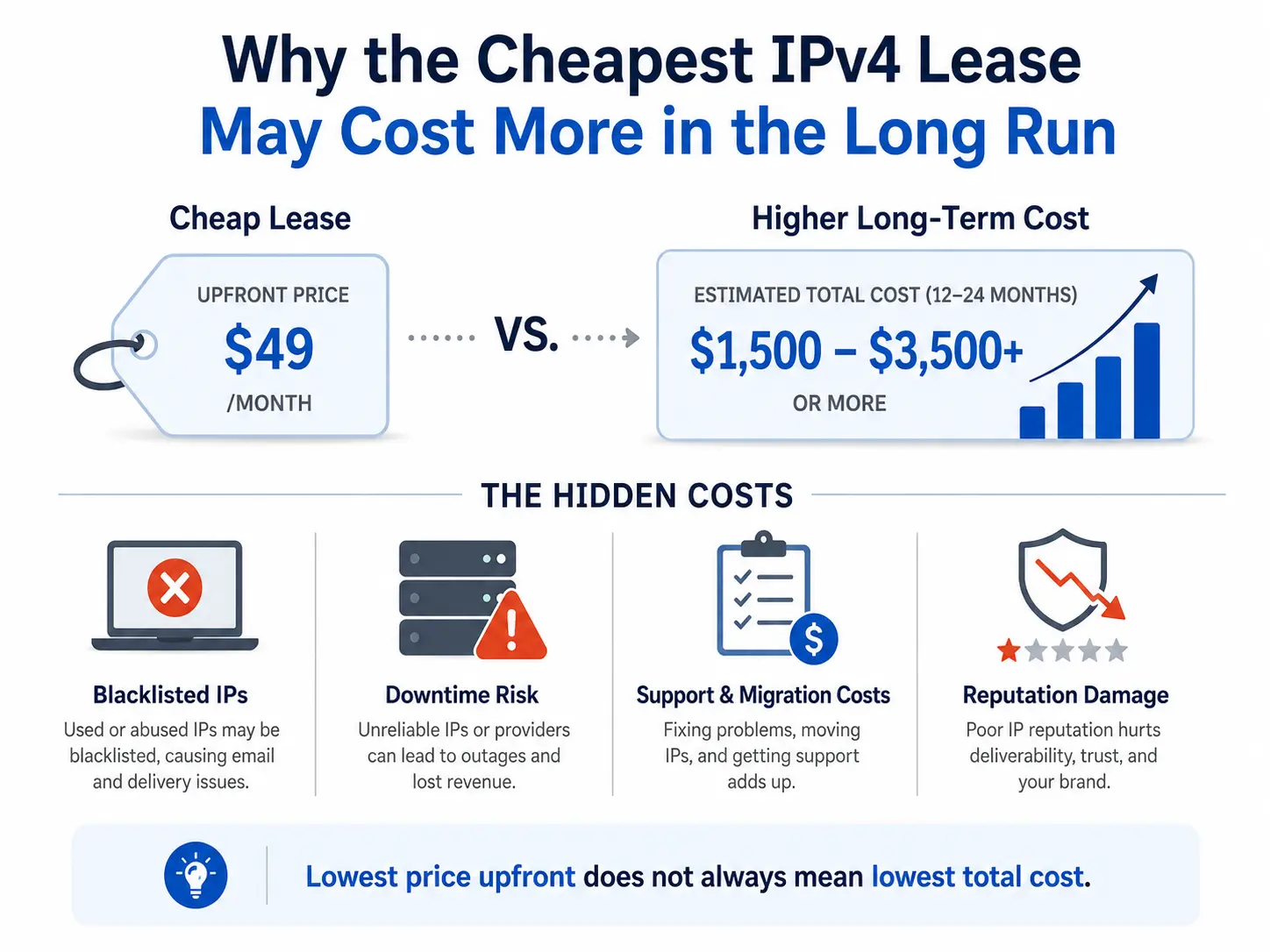
Why the Cheapest IPv4 Lease May Cost More in the Long Run
A low monthly price may look attractive during procurement, but the real cost of leased IPv4 addresses includes much more than the advertised rate. Poor IP reputation, incomplete routing authorisation, deployment delays, weak technical support, incorrect geolocation and uncertain renewal terms can quickly erase the initial saving. For testing or short-lived projects, a basic low-cost IPv4 lease may be sufficient. For production networks, however, businesses should evaluate the totalRead more Related Posts How to Prevent IPv4 Hijacking During a Transfer: 10 Security Steps Transferring IPv4 address space is not only a commercial and registry process. It is also a sensitive routing operation. During Why the Cheapest IPv4 Lease May Cost More in the Long Run A low monthly price may look attractive during procurement, but the real cost of leased IPv4 addresses includes much more What Is a /24 IPv4 Subnet and Why Is It Popular for Leasing? A /24 IPv4 subnet is one of the most common block sizes in the IPv4 leasing market. For hosting providers, .related-post {} .related-post .post-list { text-align: left; } .related-post .post-list .item { margin: 5px; padding: 10px; } .related-post .headline { font-size: 18px !important; color: #999999 !important; } .related-post .post-list .item .post_thumb { max-height: 220px; margin: 10px 0px; padding: 0px; display: block; } .related-post .post-list .item .post_title { font-size: 16px; color: #3f3f3f; margin: 10px 0px; padding: 0px; display: block; text-decoration: none; } .related-post .post-list .item .post_excerpt { font-size: 13px; color: #3f3f3f; margin: 10px 0px; padding: 0px; display: block; text-decoration: none; } @media only screen and (min-width: 1024px) { .related-post .post-list .item { width: 30%; } } @media only screen and (min-width: 768px) and (max-width: 1023px) { .related-post .post-list .item { width: 90%; } } @media only screen and (min-width: 0px) and (max-width: 767px) { .related-post .post-list .item { width: 90%; } }
What causes IPv4 deals to stall after the first agreement
IPv4 deals usually stall after the first agreement because agreeing on price is only the commercial beginning—not operational completion. A buyer and seller may agree on a block and price within hours, but the transaction can still be delayed by unclear ownership, incomplete documents, mismatched Regional Internet Registry requirements, recipient eligibility, reputation concerns, payment conditions, or missing routing authorization. The most common causes are: The seller’s authority over theRead more Related Posts How to Prevent IPv4 Hijacking During a Transfer: 10 Security Steps Transferring IPv4 address space is not only a commercial and registry process. It is also a sensitive routing operation. During Why the Cheapest IPv4 Lease May Cost More in the Long Run A low monthly price may look attractive during procurement, but the real cost of leased IPv4 addresses includes much more What Is a /24 IPv4 Subnet and Why Is It Popular for Leasing? A /24 IPv4 subnet is one of the most common block sizes in the IPv4 leasing market. For hosting providers, .related-post {} .related-post .post-list { text-align: left; } .related-post .post-list .item { margin: 5px; padding: 10px; } .related-post .headline { font-size: 18px !important; color: #999999 !important; } .related-post .post-list .item .post_thumb { max-height: 220px; margin: 10px 0px; padding: 0px; display: block; } .related-post .post-list .item .post_title { font-size: 16px; color: #3f3f3f; margin: 10px 0px; padding: 0px; display: block; text-decoration: none; } .related-post .post-list .item .post_excerpt { font-size: 13px; color: #3f3f3f; margin: 10px 0px; padding: 0px; display: block; text-decoration: none; } @media only screen and (min-width: 1024px) { .related-post .post-list .item { width: 30%; } } @media only screen and (min-width: 768px) and (max-width: 1023px) { .related-post .post-list .item { width: 90%; } } @media only screen and (min-width: 0px) and (max-width: 767px) { .related-post .post-list .item { width: 90%; } }
