What is a Proxy IP?
 Chan
Chan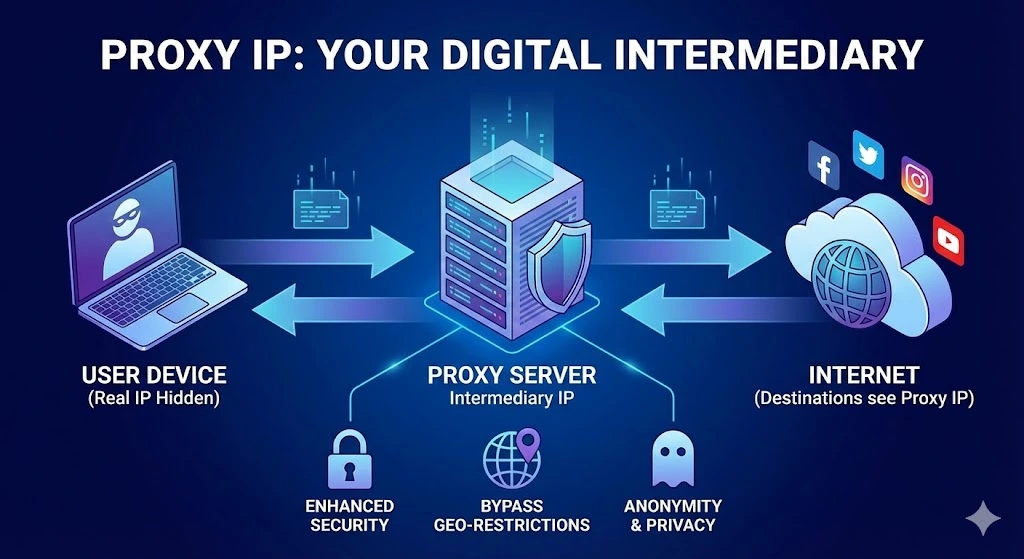
A proxy IP is an intermediary IP address used to mask or relay your original IP address when accessing the Internet. It acts as a gateway between the user and the web. When a request is made to access a website, the proxy server (which uses the proxy IP) forwards that request, hiding the user’s real IP address from the website. This allows for increased privacy and anonymity when browsing online.
Table of Contents
How Proxy IP Works
When you use a proxy, your device sends a request to the proxy server, which forwards it to the target website. The website then sees the request as coming from the proxy server, not your IP. This shields your original identity and location from the website. Afterward, the website’s response is returned to the proxy server, which forwards it to you.
Types of Proxy IPs
HTTP Proxies: These only work for web pages and are great for browsing.
SOCKS Proxies: They handle a wider range of traffic, including emails, torrent files, and FTP.
Transparent Proxies: These identify themselves and pass the original IP address, often used in caching.
Anonymous Proxies: These hide the user’s IP address but identify themselves as proxies.
High Anonymity Proxies: These provide maximum privacy by not identifying themselves as proxies and completely hiding the user’s IP.
Key Functions and Use Cases
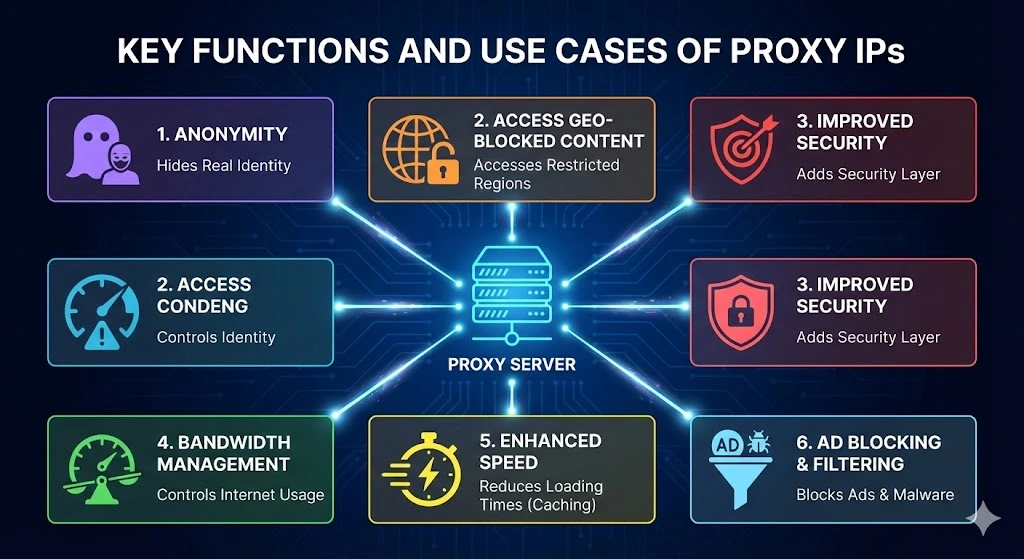
1. Anonymity: Proxy IPs hide your real identity online, allowing you to browse the web without revealing personal information.
2. Access Geo-Blocked Content: Proxies enable users to access content that is restricted in certain regions by assigning IPs from specific locations.
3. Improved Security: By masking the original IP address, proxy servers add a layer of security, making it harder for hackers to target the user directly.
4. Bandwidth Management: Proxies can help organizations manage and control internet bandwidth usage, preventing congestion.
5. Enhanced Speed: Certain proxies can cache web pages, reducing loading times for frequently accessed websites.
6. Ad Blocking and Filtering: Proxy servers can block ads, malware, or filter content to ensure a safer browsing experience.
Common Use Cases for Proxy IPs
1. Businesses: Companies use proxies for security, load balancing, and to prevent unauthorized access to their internal systems.
2. SEO and Marketing: Marketers use proxies to gather competitor data or analyze web traffic from different locations.
3. Streaming: Users rely on proxy IPs to bypass geo-restrictions and access content not available in their regions.
4. Privacy Enthusiasts: Those concerned with online privacy use proxy IPs to hide their real IP address while browsing.
The Difference Between Proxy and VPN
While both proxies and VPNs hide your IP address, a VPN encrypts all your internet traffic, offering a more secure connection. Proxies generally do not encrypt data, but they can be faster than VPNs for some use cases since they don’t handle heavy encryption.
Final Thoughts
Proxy IPs are essential tools for maintaining privacy, accessing restricted content, and improving online security. Whether for personal use, business operations, or marketing analysis, proxies offer a flexible solution to interact with the web more effectively. Some of the most popular proxy providers include Luminati, Smartproxy, and Bright Data, offering a range of services tailored to different needs.
Trusted IPv4 Leasing for Business Growth
Get enterprise-grade IPv4 space quickly, with seamless deployment and end-to-end management.
Get Started with i.leaseRelated Posts
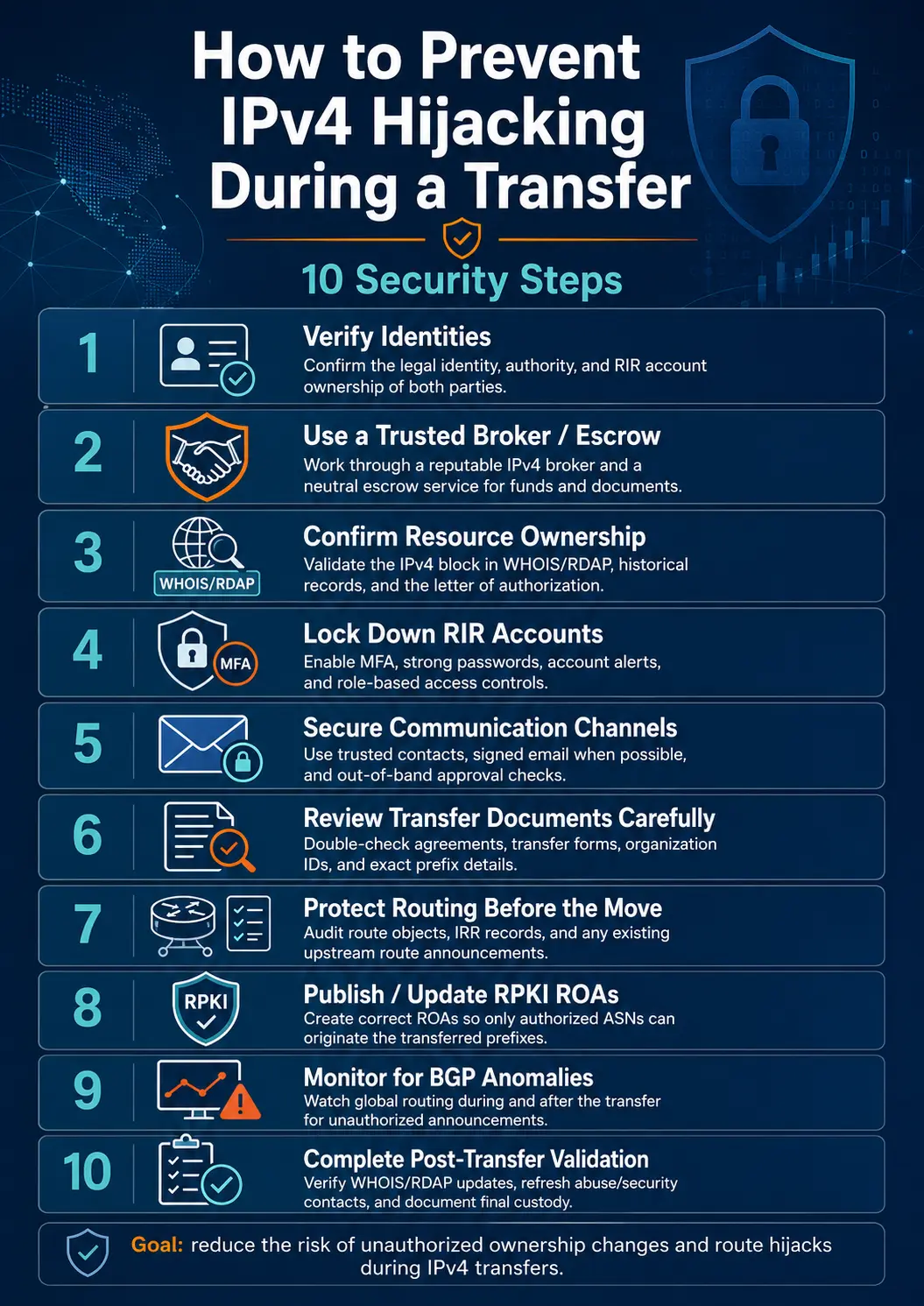
How to Prevent IPv4 Hijacking During a Transfer: 10 Security Steps
Transferring IPv4 address space is not only a commercial and registry process. It is also a sensitive routing operation. During an IPv4 transfer, control of a prefix moves from one organization to another. Registry records, Route Origin Authorizations, Internet Routing Registry objects, upstream-provider filters, reverse DNS settings, and live BGP announcements may all need to change. When these changes are completed in the wrong order—or when identity and authorizationRead more Related Posts How to Prevent IPv4 Hijacking During a Transfer: 10 Security Steps Transferring IPv4 address space is not only a commercial and registry process. It is also a sensitive routing operation. During Why the Cheapest IPv4 Lease May Cost More in the Long Run A low monthly price may look attractive during procurement, but the real cost of leased IPv4 addresses includes much more What Is a /24 IPv4 Subnet and Why Is It Popular for Leasing? A /24 IPv4 subnet is one of the most common block sizes in the IPv4 leasing market. For hosting providers, .related-post {} .related-post .post-list { text-align: left; } .related-post .post-list .item { margin: 5px; padding: 10px; } .related-post .headline { font-size: 18px !important; color: #999999 !important; } .related-post .post-list .item .post_thumb { max-height: 220px; margin: 10px 0px; padding: 0px; display: block; } .related-post .post-list .item .post_title { font-size: 16px; color: #3f3f3f; margin: 10px 0px; padding: 0px; display: block; text-decoration: none; } .related-post .post-list .item .post_excerpt { font-size: 13px; color: #3f3f3f; margin: 10px 0px; padding: 0px; display: block; text-decoration: none; } @media only screen and (min-width: 1024px) { .related-post .post-list .item { width: 30%; } } @media only screen and (min-width: 768px) and (max-width: 1023px) { .related-post .post-list .item { width: 90%; } } @media only screen and (min-width: 0px) and (max-width: 767px) { .related-post .post-list .item { width: 90%; } }
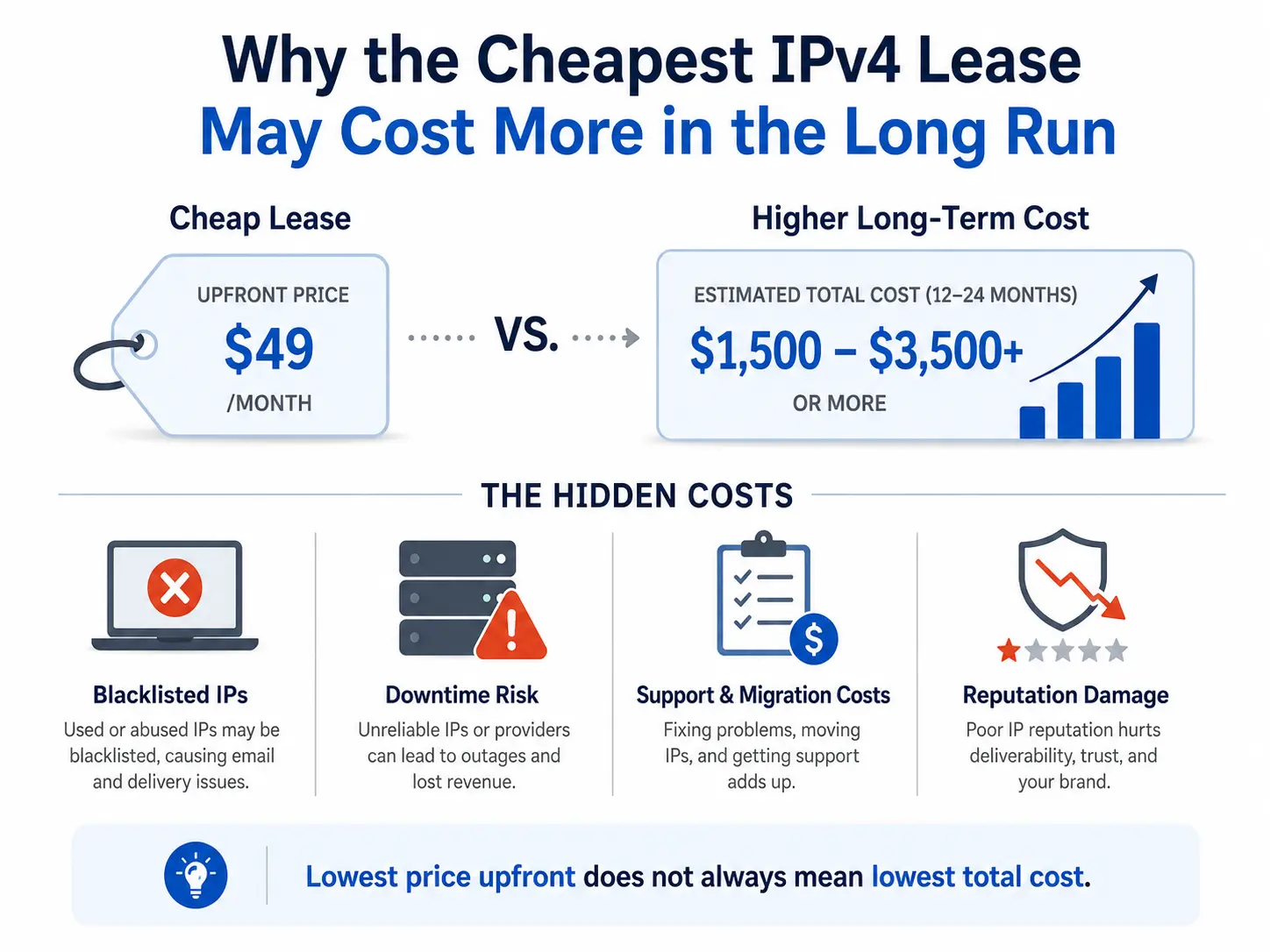
Why the Cheapest IPv4 Lease May Cost More in the Long Run
A low monthly price may look attractive during procurement, but the real cost of leased IPv4 addresses includes much more than the advertised rate. Poor IP reputation, incomplete routing authorisation, deployment delays, weak technical support, incorrect geolocation and uncertain renewal terms can quickly erase the initial saving. For testing or short-lived projects, a basic low-cost IPv4 lease may be sufficient. For production networks, however, businesses should evaluate the totalRead more Related Posts How to Prevent IPv4 Hijacking During a Transfer: 10 Security Steps Transferring IPv4 address space is not only a commercial and registry process. It is also a sensitive routing operation. During Why the Cheapest IPv4 Lease May Cost More in the Long Run A low monthly price may look attractive during procurement, but the real cost of leased IPv4 addresses includes much more What Is a /24 IPv4 Subnet and Why Is It Popular for Leasing? A /24 IPv4 subnet is one of the most common block sizes in the IPv4 leasing market. For hosting providers, .related-post {} .related-post .post-list { text-align: left; } .related-post .post-list .item { margin: 5px; padding: 10px; } .related-post .headline { font-size: 18px !important; color: #999999 !important; } .related-post .post-list .item .post_thumb { max-height: 220px; margin: 10px 0px; padding: 0px; display: block; } .related-post .post-list .item .post_title { font-size: 16px; color: #3f3f3f; margin: 10px 0px; padding: 0px; display: block; text-decoration: none; } .related-post .post-list .item .post_excerpt { font-size: 13px; color: #3f3f3f; margin: 10px 0px; padding: 0px; display: block; text-decoration: none; } @media only screen and (min-width: 1024px) { .related-post .post-list .item { width: 30%; } } @media only screen and (min-width: 768px) and (max-width: 1023px) { .related-post .post-list .item { width: 90%; } } @media only screen and (min-width: 0px) and (max-width: 767px) { .related-post .post-list .item { width: 90%; } }
What causes IPv4 deals to stall after the first agreement
IPv4 deals usually stall after the first agreement because agreeing on price is only the commercial beginning—not operational completion. A buyer and seller may agree on a block and price within hours, but the transaction can still be delayed by unclear ownership, incomplete documents, mismatched Regional Internet Registry requirements, recipient eligibility, reputation concerns, payment conditions, or missing routing authorization. The most common causes are: The seller’s authority over theRead more Related Posts How to Prevent IPv4 Hijacking During a Transfer: 10 Security Steps Transferring IPv4 address space is not only a commercial and registry process. It is also a sensitive routing operation. During Why the Cheapest IPv4 Lease May Cost More in the Long Run A low monthly price may look attractive during procurement, but the real cost of leased IPv4 addresses includes much more What Is a /24 IPv4 Subnet and Why Is It Popular for Leasing? A /24 IPv4 subnet is one of the most common block sizes in the IPv4 leasing market. For hosting providers, .related-post {} .related-post .post-list { text-align: left; } .related-post .post-list .item { margin: 5px; padding: 10px; } .related-post .headline { font-size: 18px !important; color: #999999 !important; } .related-post .post-list .item .post_thumb { max-height: 220px; margin: 10px 0px; padding: 0px; display: block; } .related-post .post-list .item .post_title { font-size: 16px; color: #3f3f3f; margin: 10px 0px; padding: 0px; display: block; text-decoration: none; } .related-post .post-list .item .post_excerpt { font-size: 13px; color: #3f3f3f; margin: 10px 0px; padding: 0px; display: block; text-decoration: none; } @media only screen and (min-width: 1024px) { .related-post .post-list .item { width: 30%; } } @media only screen and (min-width: 768px) and (max-width: 1023px) { .related-post .post-list .item { width: 90%; } } @media only screen and (min-width: 0px) and (max-width: 767px) { .related-post .post-list .item { width: 90%; } }
