What IT Teams Should Know About IP Routing
 Stephanie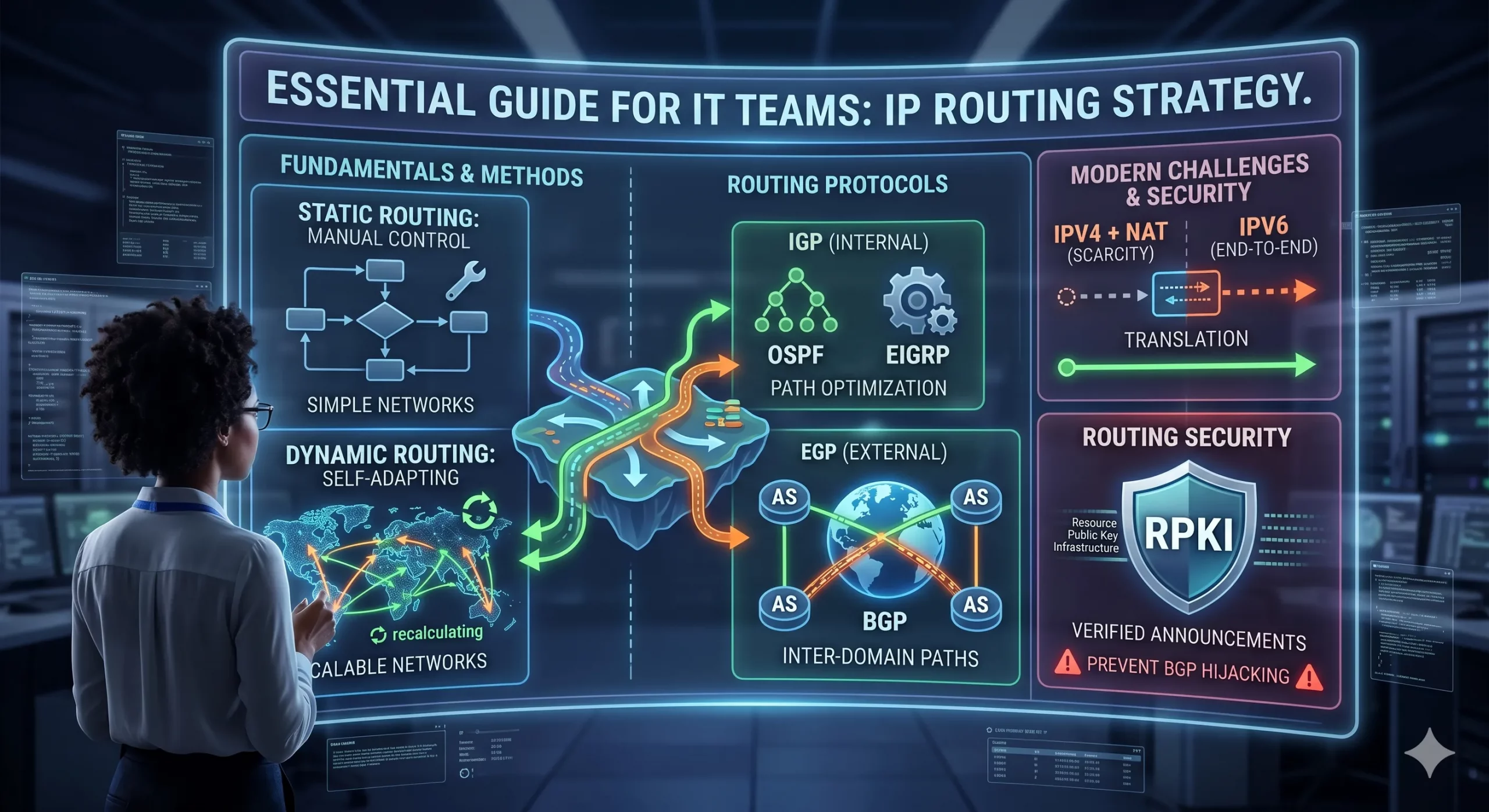
Table of Contents
In today’s cloud-first business environment, understanding how data moves across networks isn’t just a niche IT skill—it’s a necessity. For IT teams managing platforms like i.Lease, which support critical lease data and user access from multiple regions, IP routing becomes a key factor in performance, uptime, and security.
So, what exactly should IT professionals keep in mind when it comes to IP routing in enterprise applications?
Understanding the Basics
IP routing is the method of directing network traffic between different networks, usually from a user’s device to a destination server—and back. Every time someone logs into your lease platform, their data takes a journey through routers, switches, and internet pathways. These routes are not random; they’re selected based on specific rules and logic set by routing protocols like OSPF or BGP.
While much of this is handled behind the scenes, how it’s configured—and how well it’s maintained—can make or break the user experience.
Why It Matters for Cloud-Based Lease Systems
Lease management platforms often handle sensitive, business-critical information like tenant records, financial agreements, and legal documents. Delays in loading, disconnections, or security breaches due to poor routing can be more than just annoying—they can lead to lost trust, compliance issues, and operational setbacks.
That’s why IT teams need to be proactive about how IP routing is managed, especially when users are accessing platforms from different offices, remote locations, or international networks.
Key Areas to Focus On
1. Performance and Speed
Routing directly affects how fast users can interact with the platform. Using route optimization tools or working with a content delivery network (CDN) can help reduce latency, especially for global users. If users are constantly experiencing lag or connection issues, poorly optimized routing might be the culprit.
2. Security Through IP Restrictions
Many enterprise platforms now allow IP whitelisting. This lets you control exactly which IP addresses can access your systems. It’s an easy way to prevent unauthorized access and reduce exposure to external threats. Setting up alerts for suspicious IP behavior is another smart move—especially when dealing with sensitive lease data.
3. Redundancy and Failover
Outages can happen, but how your network responds makes all the difference. A well-routed system has backup paths in case of failure. Your team should regularly test failover setups and ensure data traffic is automatically rerouted through healthy paths when something goes wrong.
4. Location-Based Controls
Depending on the type of lease data you manage, certain regions may have regulations about where data can be stored or accessed from. Geo-restricting access based on IP can help ensure your company stays compliant with data protection laws like GDPR or CCPA.
5. Audit Logs and Transparency
Every login attempt, file access, or failed connection tells a story. Keeping clear IP logs allows your team to troubleshoot issues faster and support audits if questions arise about data security or access history.
Conclusion
IP routing might not be flashy, but it’s one of the foundational elements of a secure, high-performing lease management platform. By understanding how it works and making thoughtful adjustments, IT teams can keep systems fast, safe, and compliant—no matter where your users are logging in from.
If you’re managing a cloud-based lease platform and haven’t taken a close look at your routing setup lately, now might be the perfect time.
Trusted IPv4 Leasing for Business Growth
Get enterprise-grade IPv4 space quickly, with seamless deployment and end-to-end management.
Get Started with i.leaseRelated Blogs
Related Posts
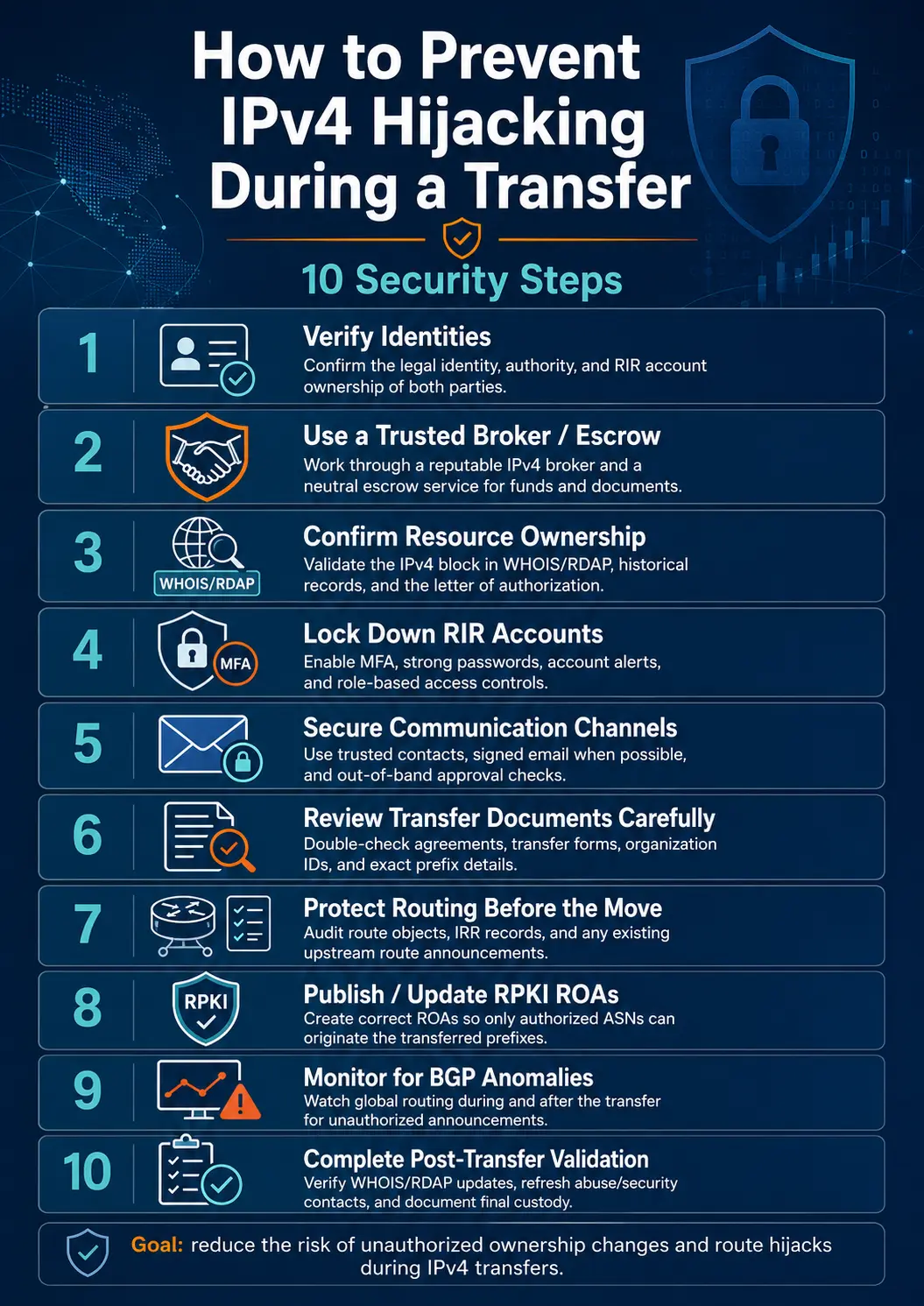
How to Prevent IPv4 Hijacking During a Transfer: 10 Security Steps
Transferring IPv4 address space is not only a commercial and registry process. It is also a sensitive routing operation. During an IPv4 transfer, control of a prefix moves from one organization to another. Registry records, Route Origin Authorizations, Internet Routing Registry objects, upstream-provider filters, reverse DNS settings, and live BGP announcements may all need to change. When these changes are completed in the wrong order—or when identity and authorizationRead more Related Posts How to Prevent IPv4 Hijacking During a Transfer: 10 Security Steps Transferring IPv4 address space is not only a commercial and registry process. It is also a sensitive routing operation. During Why the Cheapest IPv4 Lease May Cost More in the Long Run A low monthly price may look attractive during procurement, but the real cost of leased IPv4 addresses includes much more What Is a /24 IPv4 Subnet and Why Is It Popular for Leasing? A /24 IPv4 subnet is one of the most common block sizes in the IPv4 leasing market. For hosting providers, .related-post {} .related-post .post-list { text-align: left; } .related-post .post-list .item { margin: 5px; padding: 10px; } .related-post .headline { font-size: 18px !important; color: #999999 !important; } .related-post .post-list .item .post_thumb { max-height: 220px; margin: 10px 0px; padding: 0px; display: block; } .related-post .post-list .item .post_title { font-size: 16px; color: #3f3f3f; margin: 10px 0px; padding: 0px; display: block; text-decoration: none; } .related-post .post-list .item .post_excerpt { font-size: 13px; color: #3f3f3f; margin: 10px 0px; padding: 0px; display: block; text-decoration: none; } @media only screen and (min-width: 1024px) { .related-post .post-list .item { width: 30%; } } @media only screen and (min-width: 768px) and (max-width: 1023px) { .related-post .post-list .item { width: 90%; } } @media only screen and (min-width: 0px) and (max-width: 767px) { .related-post .post-list .item { width: 90%; } }
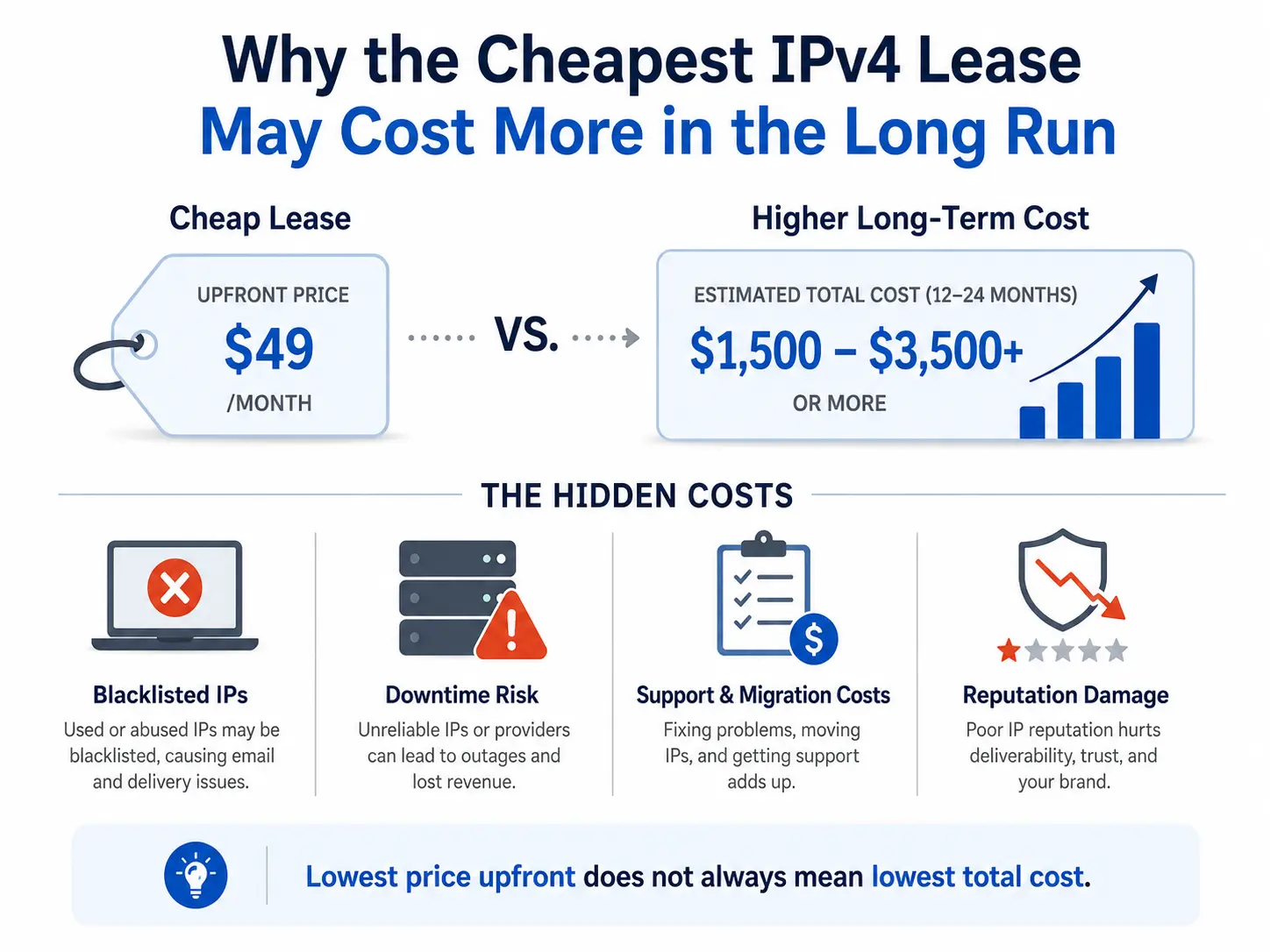
Why the Cheapest IPv4 Lease May Cost More in the Long Run
A low monthly price may look attractive during procurement, but the real cost of leased IPv4 addresses includes much more than the advertised rate. Poor IP reputation, incomplete routing authorisation, deployment delays, weak technical support, incorrect geolocation and uncertain renewal terms can quickly erase the initial saving. For testing or short-lived projects, a basic low-cost IPv4 lease may be sufficient. For production networks, however, businesses should evaluate the totalRead more Related Posts How to Prevent IPv4 Hijacking During a Transfer: 10 Security Steps Transferring IPv4 address space is not only a commercial and registry process. It is also a sensitive routing operation. During Why the Cheapest IPv4 Lease May Cost More in the Long Run A low monthly price may look attractive during procurement, but the real cost of leased IPv4 addresses includes much more What Is a /24 IPv4 Subnet and Why Is It Popular for Leasing? A /24 IPv4 subnet is one of the most common block sizes in the IPv4 leasing market. For hosting providers, .related-post {} .related-post .post-list { text-align: left; } .related-post .post-list .item { margin: 5px; padding: 10px; } .related-post .headline { font-size: 18px !important; color: #999999 !important; } .related-post .post-list .item .post_thumb { max-height: 220px; margin: 10px 0px; padding: 0px; display: block; } .related-post .post-list .item .post_title { font-size: 16px; color: #3f3f3f; margin: 10px 0px; padding: 0px; display: block; text-decoration: none; } .related-post .post-list .item .post_excerpt { font-size: 13px; color: #3f3f3f; margin: 10px 0px; padding: 0px; display: block; text-decoration: none; } @media only screen and (min-width: 1024px) { .related-post .post-list .item { width: 30%; } } @media only screen and (min-width: 768px) and (max-width: 1023px) { .related-post .post-list .item { width: 90%; } } @media only screen and (min-width: 0px) and (max-width: 767px) { .related-post .post-list .item { width: 90%; } }
What causes IPv4 deals to stall after the first agreement
IPv4 deals usually stall after the first agreement because agreeing on price is only the commercial beginning—not operational completion. A buyer and seller may agree on a block and price within hours, but the transaction can still be delayed by unclear ownership, incomplete documents, mismatched Regional Internet Registry requirements, recipient eligibility, reputation concerns, payment conditions, or missing routing authorization. The most common causes are: The seller’s authority over theRead more Related Posts How to Prevent IPv4 Hijacking During a Transfer: 10 Security Steps Transferring IPv4 address space is not only a commercial and registry process. It is also a sensitive routing operation. During Why the Cheapest IPv4 Lease May Cost More in the Long Run A low monthly price may look attractive during procurement, but the real cost of leased IPv4 addresses includes much more What Is a /24 IPv4 Subnet and Why Is It Popular for Leasing? A /24 IPv4 subnet is one of the most common block sizes in the IPv4 leasing market. For hosting providers, .related-post {} .related-post .post-list { text-align: left; } .related-post .post-list .item { margin: 5px; padding: 10px; } .related-post .headline { font-size: 18px !important; color: #999999 !important; } .related-post .post-list .item .post_thumb { max-height: 220px; margin: 10px 0px; padding: 0px; display: block; } .related-post .post-list .item .post_title { font-size: 16px; color: #3f3f3f; margin: 10px 0px; padding: 0px; display: block; text-decoration: none; } .related-post .post-list .item .post_excerpt { font-size: 13px; color: #3f3f3f; margin: 10px 0px; padding: 0px; display: block; text-decoration: none; } @media only screen and (min-width: 1024px) { .related-post .post-list .item { width: 30%; } } @media only screen and (min-width: 768px) and (max-width: 1023px) { .related-post .post-list .item { width: 90%; } } @media only screen and (min-width: 0px) and (max-width: 767px) { .related-post .post-list .item { width: 90%; } }
