Why IPv4 Scarcity drives economic Value for Operators
 Stephanie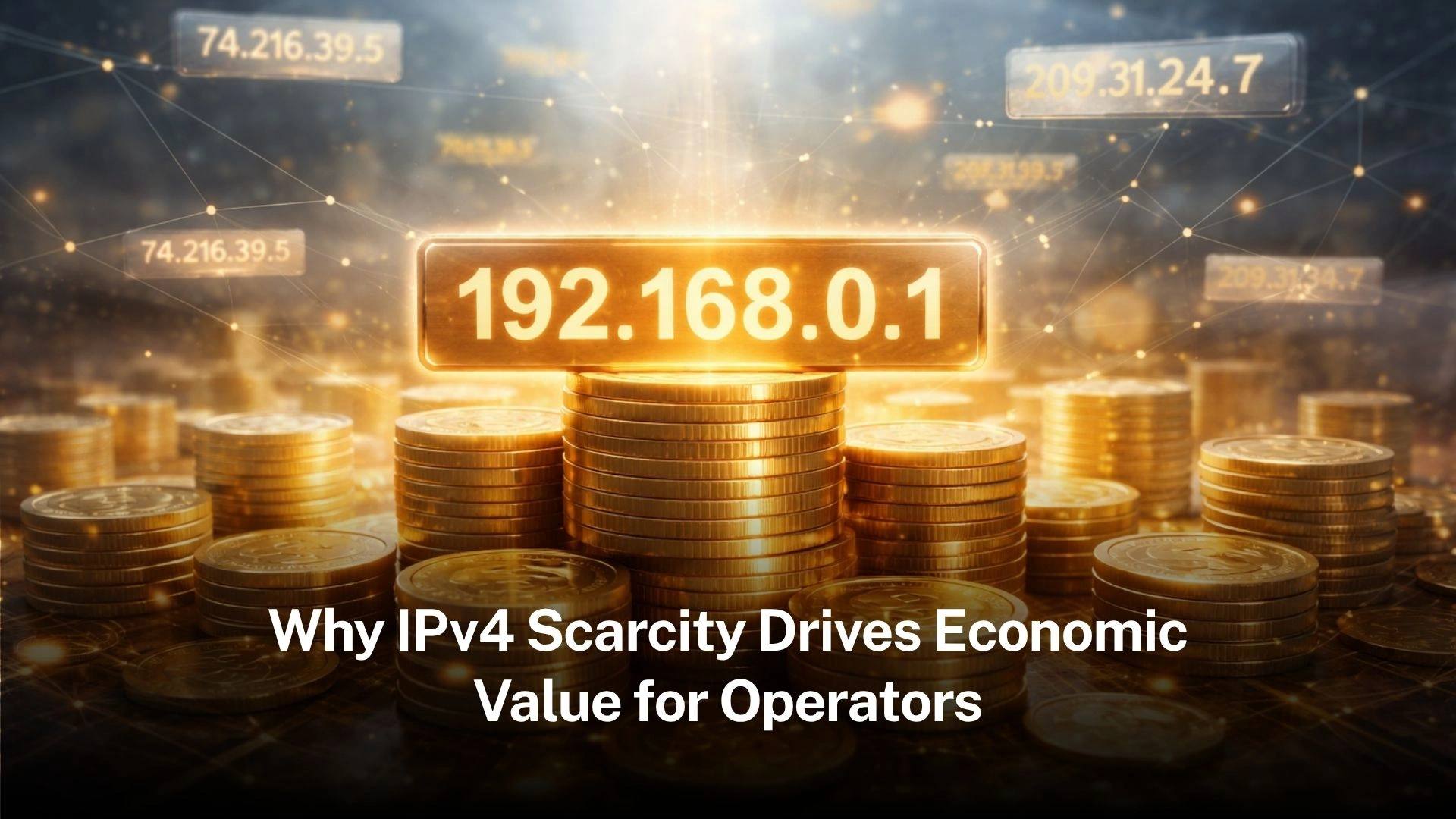
- IPv4 exhaustion has transformed addresses into scarce digital commodities, with prices driven by supply-demand imbalance.
- Operators increasingly monetise unused address space via leasing platforms such as lease, reshaping network economics.
The Structural roots of IPv4 scarcity
The global internet still runs largely on a protocol designed in an earlier era. IPv4 provides roughly 4.3 billion addresses, a number that once appeared vast but is now structurally insufficient.
Table of Contents
The exhaustion of this pool is not recent. The Internet Assigned Numbers Authority distributed the last large blocks of IPv4 addresses to regional registries in 2011, marking a turning point in internet infrastructure economics.
What followed was not a collapse, but an adaptation. Network operators, cloud providers, and telecom firms began treating IP addresses less as technical identifiers and more as finite resources requiring allocation strategies, pricing mechanisms, and, increasingly, financial optimisation.
As one long-standing industry observer, Geoff Huston of APNIC, noted, IPv4 markets emerged as an “inevitable” consequence of address depletion
From technical Resource to Economic Asset
Scarcity alone does not create value; persistent demand does. IPv4 continues to underpin most global connectivity, particularly where legacy systems, compatibility requirements, and customer reach remain tied to it.
This creates a paradox. While IPv6 exists as a technically superior and effectively unlimited alternative, the installed base of IPv4-dependent systems sustains demand.
The result is a classic supply-demand imbalance. As one analysis notes, IPv4 prices rise because “supply is low and demand is high”.
Over time, this imbalance has transformed IPv4 addresses into commodities. Prices that once hovered around $15 per address in 2014 have climbed to $40–$50 in recent years, with peaks even higher.
The language surrounding IPv4 has shifted accordingly: from allocation to valuation, from assignment to trading.
Price dynamics and market volatility
The IPv4 market is neither static nor uniform. Prices fluctuate based on block size, geographic demand, and macroeconomic conditions.
Historical data shows a sharp upward trajectory: from as little as $6–$24 per address in 2014 to as much as $60 by 2021.
More recent data suggests a degree of stabilisation and even decline in certain segments. By 2025, some large address blocks fell below $20 per address, reflecting changing supply patterns and increased market liquidity.
Yet volatility does not negate value. Instead, it reinforces the notion that IPv4 operates as a functioning market, subject to cycles, speculation, and strategic withholding.
Huston has warned that such dynamics can resemble a feedback loop, where scarcity drives price increases, which in turn incentivise further scarcity through hoarding.
Why Operators hold — and Monetise — IPv4 Assets
For network operators, IPv4 addresses are no longer passive infrastructure. They are balance-sheet assets.
Large address blocks can be transferred for significant sums, sometimes amounting to hundreds of thousands of dollars per transaction.
Operators therefore face a strategic choice:
- Use addresses internally to support subscriber growth
- Sell them outright for capital
- Lease them to generate recurring revenue
Leasing, in particular, has emerged as a flexible alternative. Rather than committing to permanent divestment, operators can monetise unused address space while retaining long-term optionality.
IP Address Platforms like i.lease reflect this shift, enabling address holders to participate in a structured leasing market.
The rise of IPv4 Leasing Platforms like i.lease
The emergence of IPv4 leasing platforms represents a maturation of the IPv4 economy.
Historically, address transfers required brokers, regulatory approvals, and lengthy due diligence processes. Today, leasing introduces liquidity and flexibility. According to industry guidance, leasing can be advantageous for organisations with rapidly changing network needs, offering short-term access without long-term capital commitment.
For operators, this transforms IPv4 into a yield-generating asset class. Idle address space can be deployed in the market, generating income streams similar to infrastructure leasing in other sectors. The keyword i.lease reflects this emerging ecosystem, where IPv4 is no longer simply consumed but actively traded and rented.
"IPv4 is the Internet’s most important service enabler; a device or server cannot be online without it."
– Heng.Lu, CEO of LARUS Limited and founder of the LARUS Foundation
Scarcity as a driver of operational behaviour
Scarcity does more than influence prices; it reshapes behaviour.
Internet service providers increasingly reserve public IPv4 addresses for high-value customers, while relying on techniques such as network address translation (NAT) for mass-market users.
This introduces tiered access to the internet itself, where direct addressing becomes a premium feature.
At the same time, scarcity incentivises efficiency. Higher prices encourage operators to optimise utilisation, reclaim unused addresses, and audit legacy allocations.
As one analysis puts it, market pricing acts as “an incentive for efficient address utilisation”.
The slow transition to IPv6
In theory, IPv6 resolves the scarcity problem entirely. Its address space is effectively limitless.
In practice, adoption remains uneven. Transitioning to IPv6 requires investment, coordination, and compatibility adjustments across networks, devices, and applications.
As long as a significant portion of the internet remains IPv4-dependent, demand persists. This creates a prolonged coexistence, where IPv4 retains economic value even as IPv6 expands technically.
The implication is structural: IPv4 scarcity is not a temporary anomaly but a sustained condition shaped by inertia and interoperability constraints.
A Market Defined by Uncertainty
The long-term future of IPv4 value remains uncertain.
Some analysts argue that prices could continue rising if demand outpaces the pace of IPv6 adoption. Others warn of a potential market correction once IPv6 reaches critical mass.
Huston describes this as a tipping point: when IPv6 dominance reduces demand for IPv4, the market could “quickly collapse”.
Until then, IPv4 exists in a state of managed scarcity, where its value is maintained not only by technical necessity but by economic behaviour.
i.lease and the financialisation of internet infrastructure
The emergence of platforms like i.lease signals a broader shift: the financialisation of internet infrastructure.
IPv4 addresses are increasingly treated as tradable, leasable, and investable assets. This aligns them with other forms of digital infrastructure, such as data centres and spectrum licences.
The implications are structural:
- Operators become asset managers as well as service providers
- Markets introduce price signals into network design decisions
- Scarcity becomes embedded in business models, not just technical constraints
This evolution raises questions about governance, allocation fairness, and the long-term sustainability of a market built on a legacy protocol.
Frequently Asked Questions
1. Why are IPv4 addresses scarce?
IPv4 provides about 4.3 billion addresses, and the global pool has been exhausted due to internet growth and device proliferation.
2. Why do IPv4 addresses still have value?
Because demand remains high while supply is fixed, creating a persistent imbalance that drives prices upward.
3. What is IPv4 leasing?
IPv4 leasing allows organisations to rent address space temporarily instead of buying it outright, improving flexibility and liquidity.
4. How much do IPv4 addresses cost?
Prices have ranged from under $10 per address a decade ago to $40–$60 at peak levels, with fluctuations depending on market conditions.
5. Will IPv6 make IPv4 obsolete?
Eventually, yes—but slow adoption means IPv4 will likely retain value for years, sustaining its market in the medium term.
Related Blogs
Related Posts
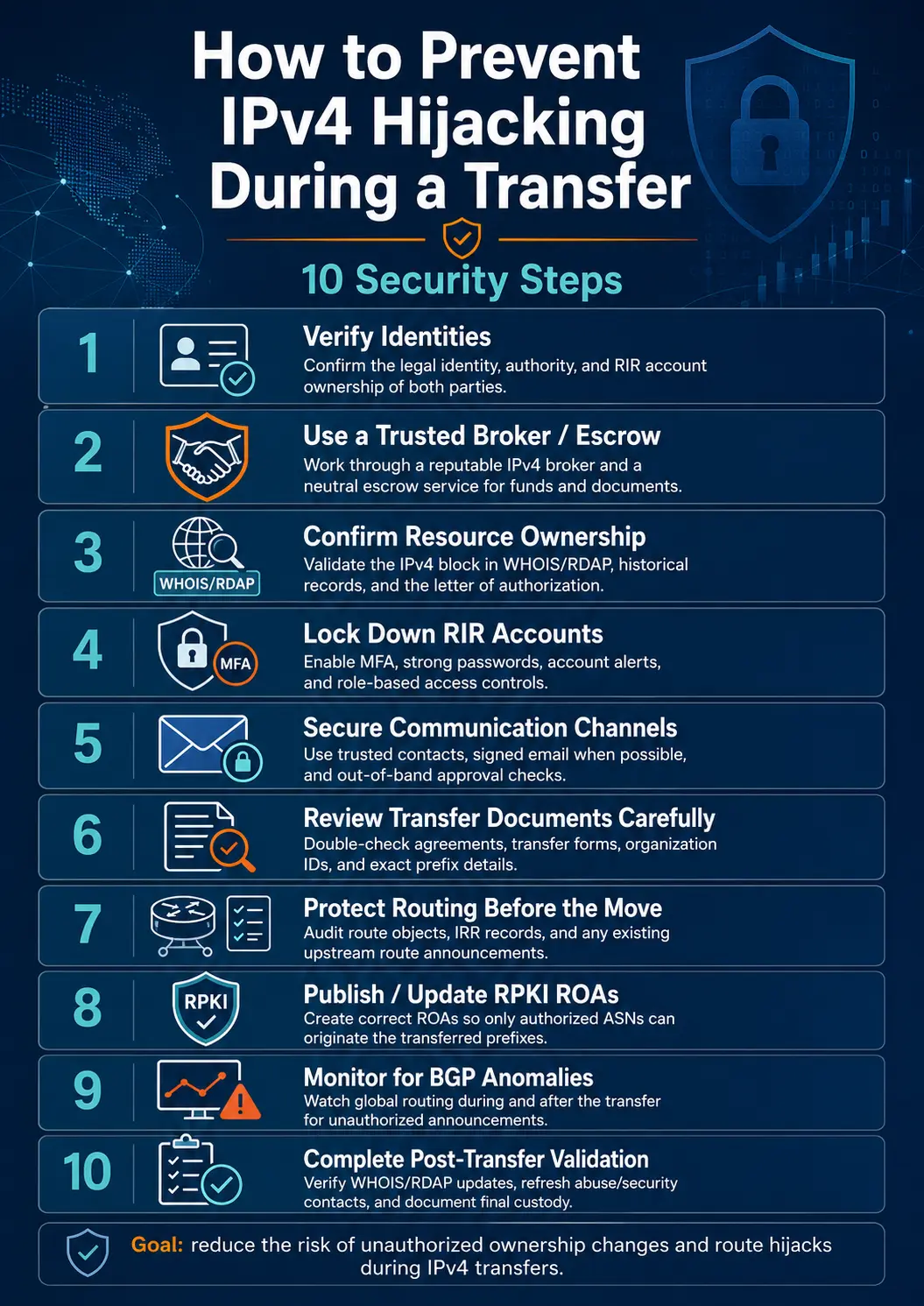
How to Prevent IPv4 Hijacking During a Transfer: 10 Security Steps
Transferring IPv4 address space is not only a commercial and registry process. It is also a sensitive routing operation. During an IPv4 transfer, control of a prefix moves from one organization to another. Registry records, Route Origin Authorizations, Internet Routing Registry objects, upstream-provider filters, reverse DNS settings, and live BGP announcements may all need to change. When these changes are completed in the wrong order—or when identity and authorizationRead more Related Posts How to Prevent IPv4 Hijacking During a Transfer: 10 Security Steps Transferring IPv4 address space is not only a commercial and registry process. It is also a sensitive routing operation. During Why the Cheapest IPv4 Lease May Cost More in the Long Run A low monthly price may look attractive during procurement, but the real cost of leased IPv4 addresses includes much more What Is a /24 IPv4 Subnet and Why Is It Popular for Leasing? A /24 IPv4 subnet is one of the most common block sizes in the IPv4 leasing market. For hosting providers, .related-post {} .related-post .post-list { text-align: left; } .related-post .post-list .item { margin: 5px; padding: 10px; } .related-post .headline { font-size: 18px !important; color: #999999 !important; } .related-post .post-list .item .post_thumb { max-height: 220px; margin: 10px 0px; padding: 0px; display: block; } .related-post .post-list .item .post_title { font-size: 16px; color: #3f3f3f; margin: 10px 0px; padding: 0px; display: block; text-decoration: none; } .related-post .post-list .item .post_excerpt { font-size: 13px; color: #3f3f3f; margin: 10px 0px; padding: 0px; display: block; text-decoration: none; } @media only screen and (min-width: 1024px) { .related-post .post-list .item { width: 30%; } } @media only screen and (min-width: 768px) and (max-width: 1023px) { .related-post .post-list .item { width: 90%; } } @media only screen and (min-width: 0px) and (max-width: 767px) { .related-post .post-list .item { width: 90%; } }
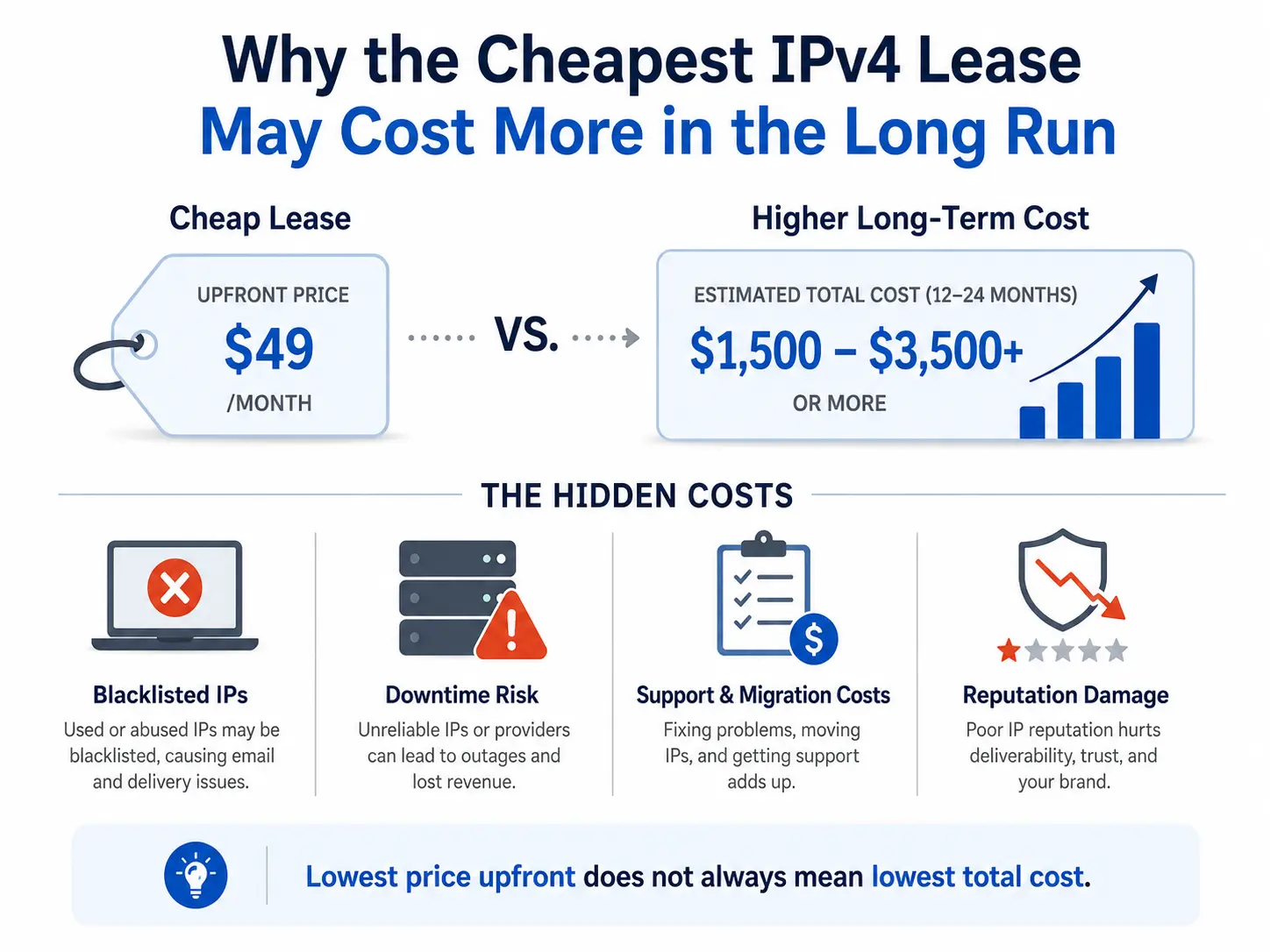
Why the Cheapest IPv4 Lease May Cost More in the Long Run
A low monthly price may look attractive during procurement, but the real cost of leased IPv4 addresses includes much more than the advertised rate. Poor IP reputation, incomplete routing authorisation, deployment delays, weak technical support, incorrect geolocation and uncertain renewal terms can quickly erase the initial saving. For testing or short-lived projects, a basic low-cost IPv4 lease may be sufficient. For production networks, however, businesses should evaluate the totalRead more Related Posts How to Prevent IPv4 Hijacking During a Transfer: 10 Security Steps Transferring IPv4 address space is not only a commercial and registry process. It is also a sensitive routing operation. During Why the Cheapest IPv4 Lease May Cost More in the Long Run A low monthly price may look attractive during procurement, but the real cost of leased IPv4 addresses includes much more What Is a /24 IPv4 Subnet and Why Is It Popular for Leasing? A /24 IPv4 subnet is one of the most common block sizes in the IPv4 leasing market. For hosting providers, .related-post {} .related-post .post-list { text-align: left; } .related-post .post-list .item { margin: 5px; padding: 10px; } .related-post .headline { font-size: 18px !important; color: #999999 !important; } .related-post .post-list .item .post_thumb { max-height: 220px; margin: 10px 0px; padding: 0px; display: block; } .related-post .post-list .item .post_title { font-size: 16px; color: #3f3f3f; margin: 10px 0px; padding: 0px; display: block; text-decoration: none; } .related-post .post-list .item .post_excerpt { font-size: 13px; color: #3f3f3f; margin: 10px 0px; padding: 0px; display: block; text-decoration: none; } @media only screen and (min-width: 1024px) { .related-post .post-list .item { width: 30%; } } @media only screen and (min-width: 768px) and (max-width: 1023px) { .related-post .post-list .item { width: 90%; } } @media only screen and (min-width: 0px) and (max-width: 767px) { .related-post .post-list .item { width: 90%; } }
What causes IPv4 deals to stall after the first agreement
IPv4 deals usually stall after the first agreement because agreeing on price is only the commercial beginning—not operational completion. A buyer and seller may agree on a block and price within hours, but the transaction can still be delayed by unclear ownership, incomplete documents, mismatched Regional Internet Registry requirements, recipient eligibility, reputation concerns, payment conditions, or missing routing authorization. The most common causes are: The seller’s authority over theRead more Related Posts How to Prevent IPv4 Hijacking During a Transfer: 10 Security Steps Transferring IPv4 address space is not only a commercial and registry process. It is also a sensitive routing operation. During Why the Cheapest IPv4 Lease May Cost More in the Long Run A low monthly price may look attractive during procurement, but the real cost of leased IPv4 addresses includes much more What Is a /24 IPv4 Subnet and Why Is It Popular for Leasing? A /24 IPv4 subnet is one of the most common block sizes in the IPv4 leasing market. For hosting providers, .related-post {} .related-post .post-list { text-align: left; } .related-post .post-list .item { margin: 5px; padding: 10px; } .related-post .headline { font-size: 18px !important; color: #999999 !important; } .related-post .post-list .item .post_thumb { max-height: 220px; margin: 10px 0px; padding: 0px; display: block; } .related-post .post-list .item .post_title { font-size: 16px; color: #3f3f3f; margin: 10px 0px; padding: 0px; display: block; text-decoration: none; } .related-post .post-list .item .post_excerpt { font-size: 13px; color: #3f3f3f; margin: 10px 0px; padding: 0px; display: block; text-decoration: none; } @media only screen and (min-width: 1024px) { .related-post .post-list .item { width: 30%; } } @media only screen and (min-width: 768px) and (max-width: 1023px) { .related-post .post-list .item { width: 90%; } } @media only screen and (min-width: 0px) and (max-width: 767px) { .related-post .post-list .item { width: 90%; } }
