Internet Censorship and the Great Firewall
 Chan
Chan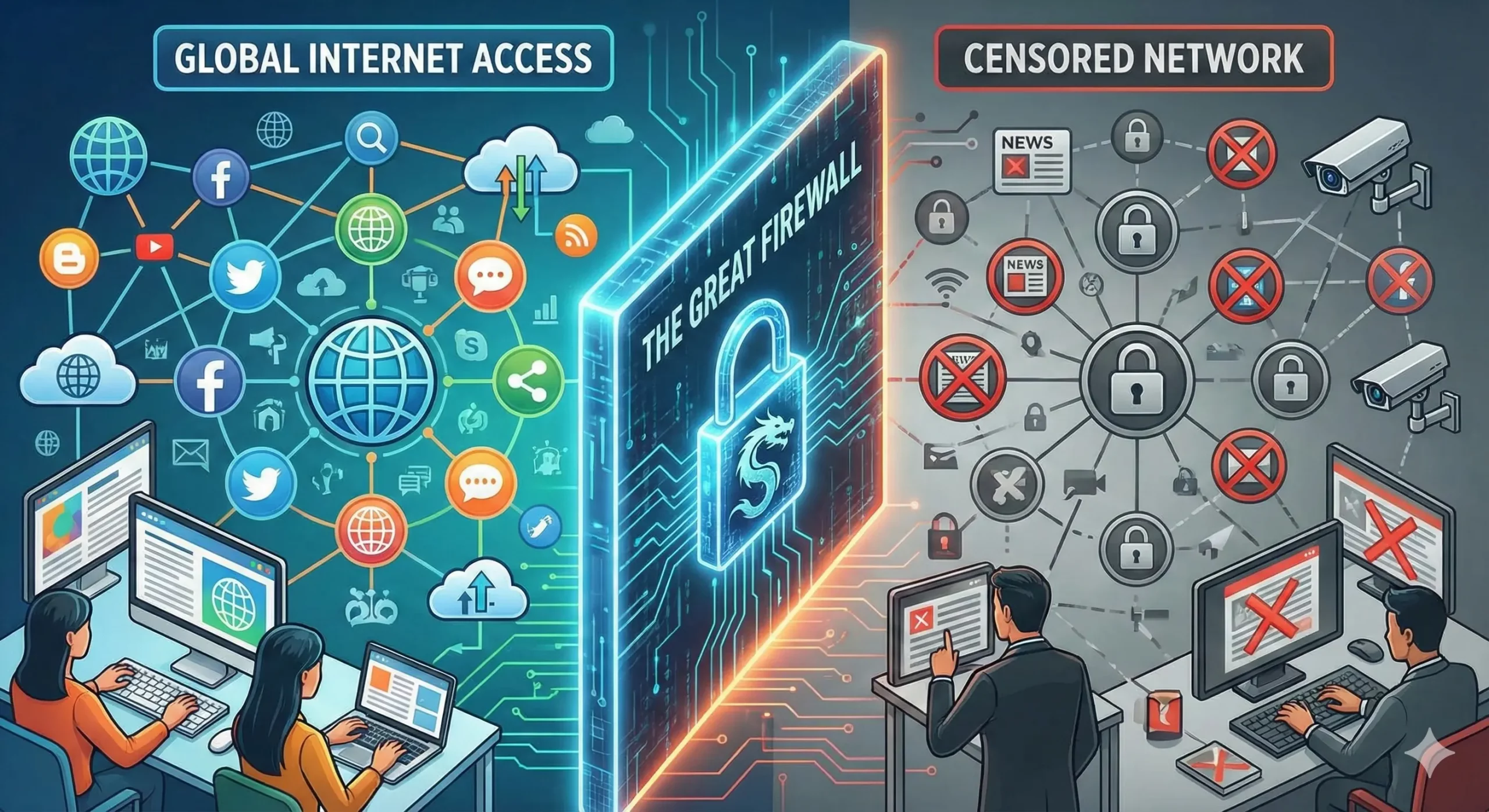
Internet Censorship and the Great Firewall: Understanding the Boundaries of the Digital World
The Internet has revolutionized the way we connect, learn, and share information, but its open nature has also led to significant debates about control, privacy, and freedom.
Table of Contents
At the center of these discussions lies the concept of Internet censorship and, most notably, China’s Great Firewall (GFW). This article explores the intricacies of Internet censorship, its implementation, and the technology behind the Great Firewall.
What Is Internet Censorship?
Internet censorship refers to the control or suppression of access to information on the Internet. Governments, private organizations, or other regulatory bodies may enforce censorship to restrict the content available to users. This can range from blocking specific websites to filtering search results or monitoring online activities.
Why Is Internet Censorship Implemented?
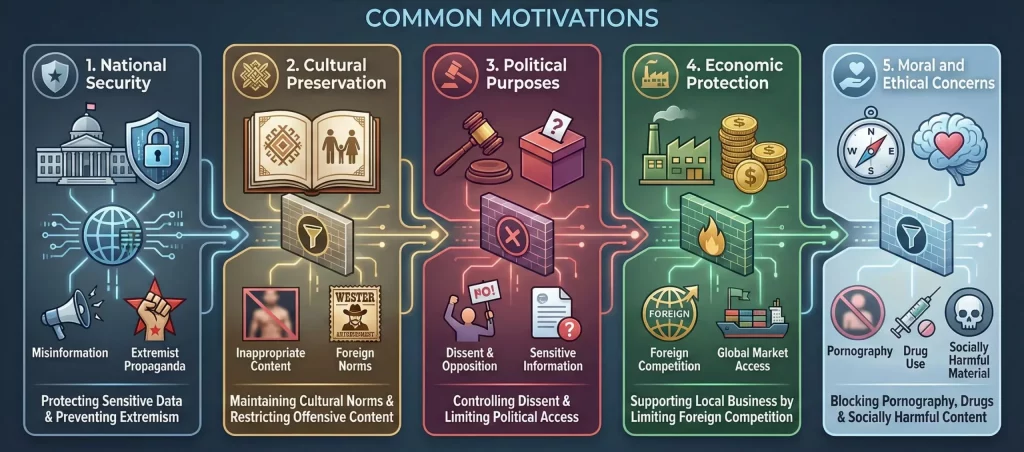
The reasons for implementing Internet censorship vary by country, ideology, and circumstance. Common motivations include:
1) National Security: Protecting sensitive government data and preventing the spread of misinformation or extremist propaganda.
2) Cultural Preservation: Maintaining cultural norms by restricting access to inappropriate or offensive content.
3) Political Purposes: Controlling dissent and opposition by limiting access to politically sensitive information.
4) Economic Protection: Supporting local businesses by limiting competition from foreign companies.
5) Moral and Ethical Concerns: Blocking content related to pornography, drug use, or other socially harmful material.
While proponents argue that censorship is essential for maintaining societal order, critics view it as a violation of free speech and access to information.
What Is the Great Firewall?
The Great Firewall, officially known as the “Golden Shield Project,” is China’s sophisticated Internet censorship system. Implemented in the early 2000s, the Great Firewall is designed to regulate the flow of information and control access to international websites and services that conflict with the government’s policies and ideologies.
Key features of the Great Firewall include:
- Blocking access to popular websites like Google, Facebook, and Twitter.
- Restricting foreign news outlets and platforms critical of the Chinese government.
- Monitoring and filtering user activities to ensure compliance with local laws.
How Is Internet Censorship Implemented?
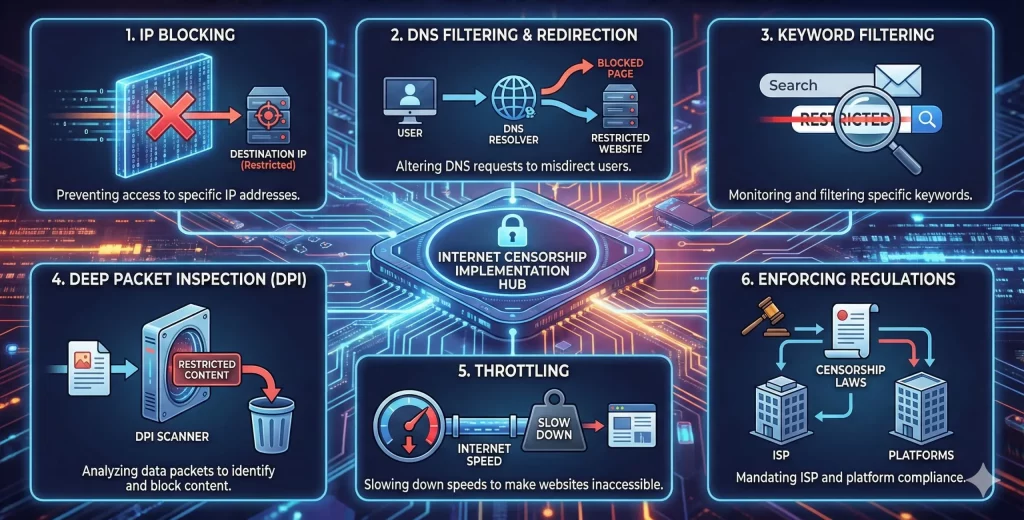
Internet censorship involves a combination of technical measures and regulatory policies. Here are the primary methods:
- IP Blocking: Preventing access to specific IP addresses linked to restricted websites.
- DNS Filtering and Redirection: Altering Domain Name System (DNS) requests to misdirect users trying to reach restricted websites.
- Keyword Filtering: Monitoring and filtering specific keywords in search queries, emails, or social media posts.
- Deep Packet Inspection (DPI): Analyzing data packets to identify and block restricted content.
- Throttling: Slowing down Internet speeds for certain websites or services to make them virtually inaccessible.
- Enforcing Regulations: Mandating that Internet service providers (ISPs) and platforms comply with censorship laws.
How Does the Great Firewall Work?
The Great Firewall employs an advanced blend of the above techniques, enhanced by artificial intelligence (AI) and machine learning technologies. Here’s how it functions:
- Network Surveillance: The Chinese government monitors traffic through DPI, allowing authorities to block or throttle connections to restricted websites.
- URL Filtering: Specific URLs or domains are blacklisted to prevent users from accessing them.
- Keyword Monitoring: Content with sensitive keywords is flagged and blocked, affecting search engines and social media platforms.
- VPN Detection and Blocking: Virtual Private Networks (VPNs), often used to bypass censorship, are detected and disabled through advanced algorithms.
- Collaboration with Local Companies: Domestic platforms like WeChat and Baidu operate under strict regulatory guidelines to enforce censorship internally.
Conclusion
Internet censorship and the Great Firewall exemplify the complexities of regulating the digital space. While censorship aims to achieve goals like national security and cultural preservation, it often raises ethical questions about freedom of expression and access to information.
The Great Firewall, in particular, showcases how technology can be leveraged to control online narratives, creating a heavily monitored and filtered Internet ecosystem.
Trusted IPv4 Leasing for Business Growth
Get enterprise-grade IPv4 space quickly, with seamless deployment and end-to-end management.
Get Started with i.leaseArticles connexes

Primauté du code en cours d’exécution : pourquoi la location d’adresses IPv4 doit être jugée sur la base de preuves opérationnelles
La location IPv4 commence souvent par une question simple : Ce fournisseur peut-il nous fournir les adresses ? Mais pour les entreprises qui dépendent de l’IPv4 pour l’hébergement, le VPN, le SaaS, le cloud, les télécommunications, la sécurité, la livraison d’e-mails ou les plateformes destinées aux clients, cette question ne suffit pas. Une meilleure question est : Cette structure IPv4 peut-elle prouver qu’elle fonctionne sur le plan opérationnel ?Read more Related Posts La Running-Code Primacy: por qué el arrendamiento de IPv4 debe juzgarse mediante pruebas operativas El arrendamiento de IPv4 suele comenzar con una pregunta simple: ¿Puede este proveedor darnos las direcciones? Pero para las empresas Read more Risques liés au renouvellement d’IPv4 : quand le manque de responsabilisation se transforme en trahison du code en cours d’exécution La plupart des entreprises entrent sur le marché IPv4 avec un objectif simple. Elles ont besoin d’adresses. Peut-être en ont-elles Read more Pourquoi la plupart des entreprises sont exposées accidentellement au risque d’échec d’attribution d’adresse IPv4 La rareté de l’IPv4 est largement comprise. Ce que de nombreuses entreprises sous-estiment encore, c’est le risque de continuité lié Read more .related-post {} .related-post .post-list { text-align: left; } .related-post .post-list .item { margin: 5px; padding: 10px; } .related-post .headline { font-size: 18px !important; color: #999999 !important; } .related-post .post-list .item .post_thumb { max-height: 220px; margin: 10px 0px; padding: 0px; display: block; } .related-post .post-list .item .post_title { font-size: 16px; color: #3f3f3f; margin: 10px 0px; padding: 0px; display: block; text-decoration: none; } .related-post .post-list .item .post_excerpt { font-size: 13px; color: #3f3f3f; margin: 10px 0px; padding: 0px; display: block; text-decoration: none; } @media only screen and (min-width: 1024px) { .related-post .post-list .item { width: 30%; } } @media only screen and (min-width: 768px) and (max-width: 1023px) { .related-post .post-list .item { width: 90%; } } @media only screen and (min-width: 0px) and (max-width: 767px) { .related-post .post-list .item { width: 90%; } }
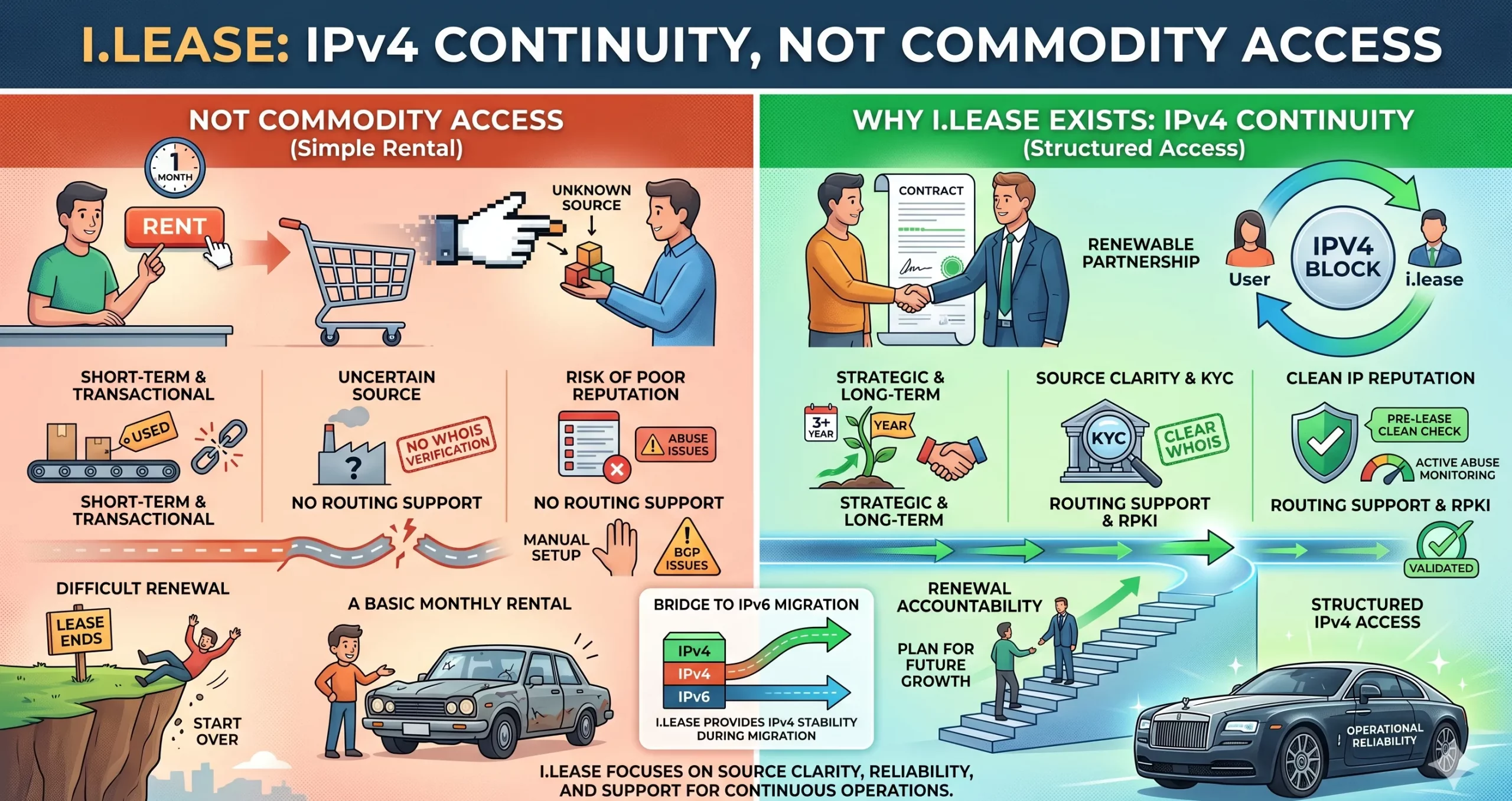
Risques liés au renouvellement d’IPv4 : quand le manque de responsabilisation se transforme en trahison du code en cours d’exécution
La plupart des entreprises entrent sur le marché IPv4 avec un objectif simple. Elles ont besoin d’adresses. Peut-être en ont-elles besoin pour l’hébergement. Peut-être en ont-elles besoin pour une infrastructure VPN. Peut-être en ont-elles besoin pour des services cloud, des plateformes SaaS, l’expansion télécom, des systèmes e-mail, des outils de cybersécurité ou des applications destinées aux clients. Elles recherchent donc un fournisseur IPv4. Elles comparent les prix. Elles vérifientRead more Related Posts Risk Placement in IPv4 Transactions: What Enterprises Should Know The IPv4 market has quietly evolved into a structured secondary asset class. As global IPv4 exhaustion continues, enterprises, ISPs, and Read more Understanding Operational Risk in IPv4 Address Markets IPv4 has long stopped being a simple technical identifier system. It has become a constrained, priced, and operationally embedded infrastructure Read more Primauté du code en cours d’exécution : pourquoi la location d’adresses IPv4 doit être jugée sur la base de preuves opérationnelles La location IPv4 commence souvent par une question simple :Ce fournisseur peut-il nous fournir les adresses ?Mais pour les entreprises Read more .related-post {} .related-post .post-list { text-align: left; } .related-post .post-list .item { margin: 5px; padding: 10px; } .related-post .headline { font-size: 18px !important; color: #999999 !important; } .related-post .post-list .item .post_thumb { max-height: 220px; margin: 10px 0px; padding: 0px; display: block; } .related-post .post-list .item .post_title { font-size: 16px; color: #3f3f3f; margin: 10px 0px; padding: 0px; display: block; text-decoration: none; } .related-post .post-list .item .post_excerpt { font-size: 13px; color: #3f3f3f; margin: 10px 0px; padding: 0px; display: block; text-decoration: none; } @media only screen and (min-width: 1024px) { .related-post .post-list .item { width: 30%; } } @media only screen and (min-width: 768px) and (max-width: 1023px) { .related-post .post-list .item { width: 90%; } } @media only screen and (min-width: 0px) and (max-width: 767px) { .related-post .post-list .item { width: 90%; } }
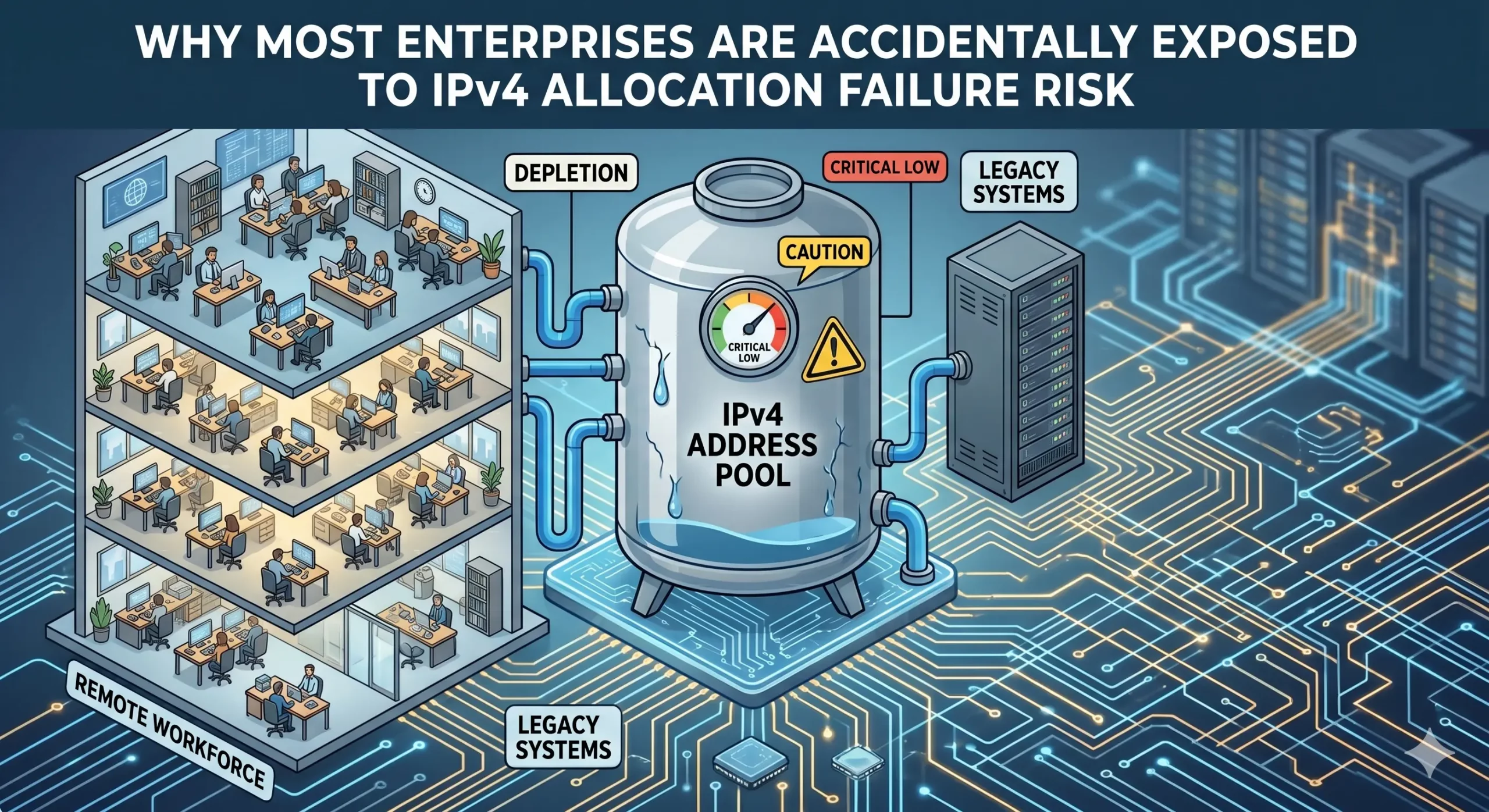
Pourquoi la plupart des entreprises sont exposées accidentellement au risque d’échec d’attribution d’adresse IPv4
La rareté de l’IPv4 est largement comprise. Ce que de nombreuses entreprises sous-estiment encore, c’est le risque de continuité lié à la manière dont les ressources d’adressage sont gouvernées et maintenues. Les entreprises maintiennent souvent une utilisation opérationnelle des ressources IPv4 sans disposer d’une visibilité complète sur les conditions de continuité qui soutiennent ces allocations. La dépendance croissante à la location, aux transferts et aux infrastructures gérées par desRead more Related Posts Risk Placement in IPv4 Transactions: What Enterprises Should Know The IPv4 market has quietly evolved into a structured secondary asset class. As global IPv4 exhaustion continues, enterprises, ISPs, and Read more Understanding Operational Risk in IPv4 Address Markets IPv4 has long stopped being a simple technical identifier system. It has become a constrained, priced, and operationally embedded infrastructure Read more Primauté du code en cours d’exécution : pourquoi la location d’adresses IPv4 doit être jugée sur la base de preuves opérationnelles La location IPv4 commence souvent par une question simple :Ce fournisseur peut-il nous fournir les adresses ?Mais pour les entreprises Read more .related-post {} .related-post .post-list { text-align: left; } .related-post .post-list .item { margin: 5px; padding: 10px; } .related-post .headline { font-size: 18px !important; color: #999999 !important; } .related-post .post-list .item .post_thumb { max-height: 220px; margin: 10px 0px; padding: 0px; display: block; } .related-post .post-list .item .post_title { font-size: 16px; color: #3f3f3f; margin: 10px 0px; padding: 0px; display: block; text-decoration: none; } .related-post .post-list .item .post_excerpt { font-size: 13px; color: #3f3f3f; margin: 10px 0px; padding: 0px; display: block; text-decoration: none; } @media only screen and (min-width: 1024px) { .related-post .post-list .item { width: 30%; } } @media only screen and (min-width: 768px) and (max-width: 1023px) { .related-post .post-list .item { width: 90%; } } @media only screen and (min-width: 0px) and (max-width: 767px) { .related-post .post-list .item { width: 90%; } }
