Securing Your IP Network: Part 1
 Chan
Chan
In this tech-driven world, keeping your IP network safe is like locking the doors to your digital house. It’s crucial for protecting your important stuff, keeping things running smoothly, and dodging online troublemakers. As businesses rely more on networks for everything from chats to storing files, beefing up security is vital. So, let’s dive into some simple ways to keep your IP network locked down and fend off those cybercriminals.
Table of Contents
Why do we need to secure the IP network?
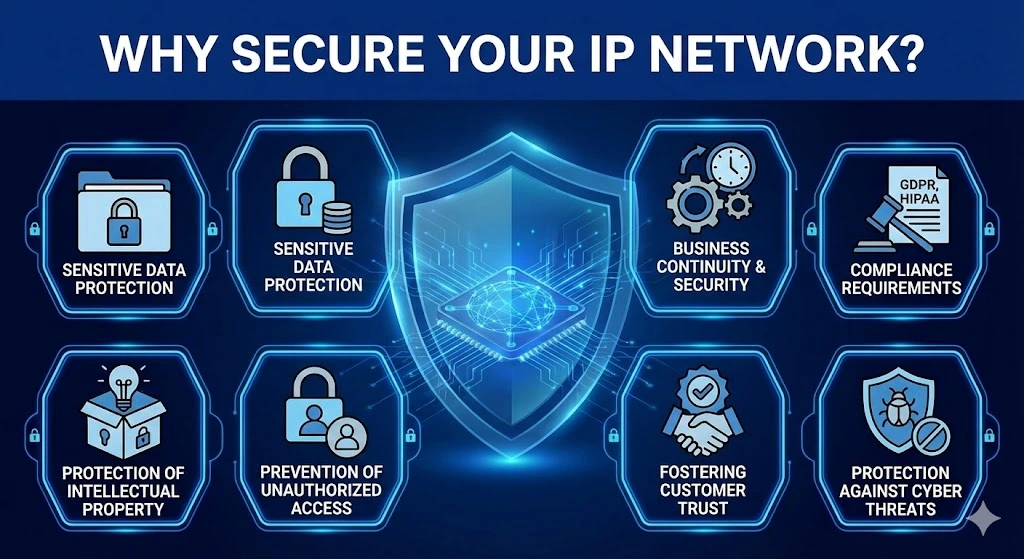
Securing an IP network is essential for most businesses. Here are the reasons:
Protection of Sensitive Data
IP networks often transmit sensitive information, such as personal data, financial records, and intellectual property. Securing the network helps prevent unauthorized access and data breaches, safeguarding sensitive information from theft or misuse.
Business Continuity & Security
A secure IP network ensures uninterrupted operations by mitigating the risk of cyber attacks, system compromises, and network outages. By implementing robust security measures, businesses can maintain continuity and prevent disruptions to critical services and operations.
Compliance Requirements
Many industries are subject to regulatory requirements and compliance standards governing data security and privacy. Securing the IP network helps organizations comply with regulatory mandates such as GDPR, HIPAA, PCI DSS, and others, avoiding penalties, legal liabilities, and reputational damage.
Protection Against Cyber Threats
The Internet is rife with cyber threats such as malware, ransomware, phishing attacks, and DDoS (Distributed Denial of Service) attacks. Securing the IP network helps defend against these threats, reducing the risk of data loss, financial losses, and reputational harm.
Fostering Customer Trust
Maintaining a secure IP network builds trust and confidence among customers, partners, and stakeholders. By demonstrating a commitment to cybersecurity, businesses can reassure customers that their data is protected and their privacy is respected, enhancing customer loyalty and brand reputation.
Prevention of Unauthorized Access
Securing the IP network prevents unauthorized users from gaining access to network resources, systems, and data. Access controls, encryption, and authentication mechanisms help verify the identity of users and restrict access to authorized personnel only, reducing the risk of insider threats and unauthorized activities.
Protection of Intellectual Property
Intellectual property (IP) assets such as proprietary software, trade secrets, and confidential business information are valuable assets that require protection. Securing the IP network helps safeguard intellectual property from theft, espionage, and unauthorized disclosure, preserving competitive advantage and innovation.
Securing IP Address in a brief
Overall, securing an IP network is essential for protecting sensitive data, ensuring business continuity, complying with regulatory requirements, defending against cyber threats, building trust with customers, preventing unauthorized access, and safeguarding intellectual property. Investing in robust security measures helps organizations mitigate risks, strengthen their cybersecurity posture, and maintain a resilient and trustworthy network infrastructure.
Stay tuned for Part 2, where we’ll dive deeper into foolproof tips to secure your IP network! Don’t miss out!
Trusted IPv4 Leasing for Business Growth
Get enterprise-grade IPv4 space quickly, with seamless deployment and end-to-end management.
Get Started with i.leaseFAQs
What are the most common vulnerabilities in an IP network?
The most common vulnerabilities include unpatched software, weak administrative passwords, open ports (like RDP or Telnet), and lack of encryption for data in transit. Regularly performing vulnerability scans and maintaining a strict update schedule are the first steps to closing these digital “doors.”
How does a secure IP network help with GDPR and HIPAA compliance?
These regulations mandate that personal and health data must be protected against unauthorized access. A secure network uses Encryption (TLS/SSL) and Access Control Lists (ACLs) to ensure that only authorized personnel can access sensitive information, directly fulfilling the “Security of Processing” requirements of these laws.
Can a secure IP network prevent DDoS attacks?
While a standard firewall can stop some small attacks, modern DDoS (Distributed Denial of Service) attacks require specialized mitigation tools. These tools detect unusual traffic spikes and “scrub” the traffic to ensure only legitimate users reach your network, maintaining your business continuity even during an attack.
Articles connexes

Primauté du code en cours d’exécution : pourquoi la location d’adresses IPv4 doit être jugée sur la base de preuves opérationnelles
La location IPv4 commence souvent par une question simple : Ce fournisseur peut-il nous fournir les adresses ? Mais pour les entreprises qui dépendent de l’IPv4 pour l’hébergement, le VPN, le SaaS, le cloud, les télécommunications, la sécurité, la livraison d’e-mails ou les plateformes destinées aux clients, cette question ne suffit pas. Une meilleure question est : Cette structure IPv4 peut-elle prouver qu’elle fonctionne sur le plan opérationnel ?Read more Related Posts La Running-Code Primacy: por qué el arrendamiento de IPv4 debe juzgarse mediante pruebas operativas El arrendamiento de IPv4 suele comenzar con una pregunta simple: ¿Puede este proveedor darnos las direcciones? Pero para las empresas Read more Risques liés au renouvellement d’IPv4 : quand le manque de responsabilisation se transforme en trahison du code en cours d’exécution La plupart des entreprises entrent sur le marché IPv4 avec un objectif simple. Elles ont besoin d’adresses. Peut-être en ont-elles Read more Pourquoi la plupart des entreprises sont exposées accidentellement au risque d’échec d’attribution d’adresse IPv4 La rareté de l’IPv4 est largement comprise. Ce que de nombreuses entreprises sous-estiment encore, c’est le risque de continuité lié Read more .related-post {} .related-post .post-list { text-align: left; } .related-post .post-list .item { margin: 5px; padding: 10px; } .related-post .headline { font-size: 18px !important; color: #999999 !important; } .related-post .post-list .item .post_thumb { max-height: 220px; margin: 10px 0px; padding: 0px; display: block; } .related-post .post-list .item .post_title { font-size: 16px; color: #3f3f3f; margin: 10px 0px; padding: 0px; display: block; text-decoration: none; } .related-post .post-list .item .post_excerpt { font-size: 13px; color: #3f3f3f; margin: 10px 0px; padding: 0px; display: block; text-decoration: none; } @media only screen and (min-width: 1024px) { .related-post .post-list .item { width: 30%; } } @media only screen and (min-width: 768px) and (max-width: 1023px) { .related-post .post-list .item { width: 90%; } } @media only screen and (min-width: 0px) and (max-width: 767px) { .related-post .post-list .item { width: 90%; } }

Risques liés au renouvellement d’IPv4 : quand le manque de responsabilisation se transforme en trahison du code en cours d’exécution
La plupart des entreprises entrent sur le marché IPv4 avec un objectif simple. Elles ont besoin d’adresses. Peut-être en ont-elles besoin pour l’hébergement. Peut-être en ont-elles besoin pour une infrastructure VPN. Peut-être en ont-elles besoin pour des services cloud, des plateformes SaaS, l’expansion télécom, des systèmes e-mail, des outils de cybersécurité ou des applications destinées aux clients. Elles recherchent donc un fournisseur IPv4. Elles comparent les prix. Elles vérifientRead more Related Posts Risk Placement in IPv4 Transactions: What Enterprises Should Know The IPv4 market has quietly evolved into a structured secondary asset class. As global IPv4 exhaustion continues, enterprises, ISPs, and Read more Understanding Operational Risk in IPv4 Address Markets IPv4 has long stopped being a simple technical identifier system. It has become a constrained, priced, and operationally embedded infrastructure Read more Primauté du code en cours d’exécution : pourquoi la location d’adresses IPv4 doit être jugée sur la base de preuves opérationnelles La location IPv4 commence souvent par une question simple :Ce fournisseur peut-il nous fournir les adresses ?Mais pour les entreprises Read more .related-post {} .related-post .post-list { text-align: left; } .related-post .post-list .item { margin: 5px; padding: 10px; } .related-post .headline { font-size: 18px !important; color: #999999 !important; } .related-post .post-list .item .post_thumb { max-height: 220px; margin: 10px 0px; padding: 0px; display: block; } .related-post .post-list .item .post_title { font-size: 16px; color: #3f3f3f; margin: 10px 0px; padding: 0px; display: block; text-decoration: none; } .related-post .post-list .item .post_excerpt { font-size: 13px; color: #3f3f3f; margin: 10px 0px; padding: 0px; display: block; text-decoration: none; } @media only screen and (min-width: 1024px) { .related-post .post-list .item { width: 30%; } } @media only screen and (min-width: 768px) and (max-width: 1023px) { .related-post .post-list .item { width: 90%; } } @media only screen and (min-width: 0px) and (max-width: 767px) { .related-post .post-list .item { width: 90%; } }
Pourquoi la plupart des entreprises sont exposées accidentellement au risque d’échec d’attribution d’adresse IPv4
La rareté de l’IPv4 est largement comprise. Ce que de nombreuses entreprises sous-estiment encore, c’est le risque de continuité lié à la manière dont les ressources d’adressage sont gouvernées et maintenues. Les entreprises maintiennent souvent une utilisation opérationnelle des ressources IPv4 sans disposer d’une visibilité complète sur les conditions de continuité qui soutiennent ces allocations. La dépendance croissante à la location, aux transferts et aux infrastructures gérées par desRead more Related Posts Risk Placement in IPv4 Transactions: What Enterprises Should Know The IPv4 market has quietly evolved into a structured secondary asset class. As global IPv4 exhaustion continues, enterprises, ISPs, and Read more Understanding Operational Risk in IPv4 Address Markets IPv4 has long stopped being a simple technical identifier system. It has become a constrained, priced, and operationally embedded infrastructure Read more Primauté du code en cours d’exécution : pourquoi la location d’adresses IPv4 doit être jugée sur la base de preuves opérationnelles La location IPv4 commence souvent par une question simple :Ce fournisseur peut-il nous fournir les adresses ?Mais pour les entreprises Read more .related-post {} .related-post .post-list { text-align: left; } .related-post .post-list .item { margin: 5px; padding: 10px; } .related-post .headline { font-size: 18px !important; color: #999999 !important; } .related-post .post-list .item .post_thumb { max-height: 220px; margin: 10px 0px; padding: 0px; display: block; } .related-post .post-list .item .post_title { font-size: 16px; color: #3f3f3f; margin: 10px 0px; padding: 0px; display: block; text-decoration: none; } .related-post .post-list .item .post_excerpt { font-size: 13px; color: #3f3f3f; margin: 10px 0px; padding: 0px; display: block; text-decoration: none; } @media only screen and (min-width: 1024px) { .related-post .post-list .item { width: 30%; } } @media only screen and (min-width: 768px) and (max-width: 1023px) { .related-post .post-list .item { width: 90%; } } @media only screen and (min-width: 0px) and (max-width: 767px) { .related-post .post-list .item { width: 90%; } }
