What is the Domain Name System, the DNS?
 Chan
Chan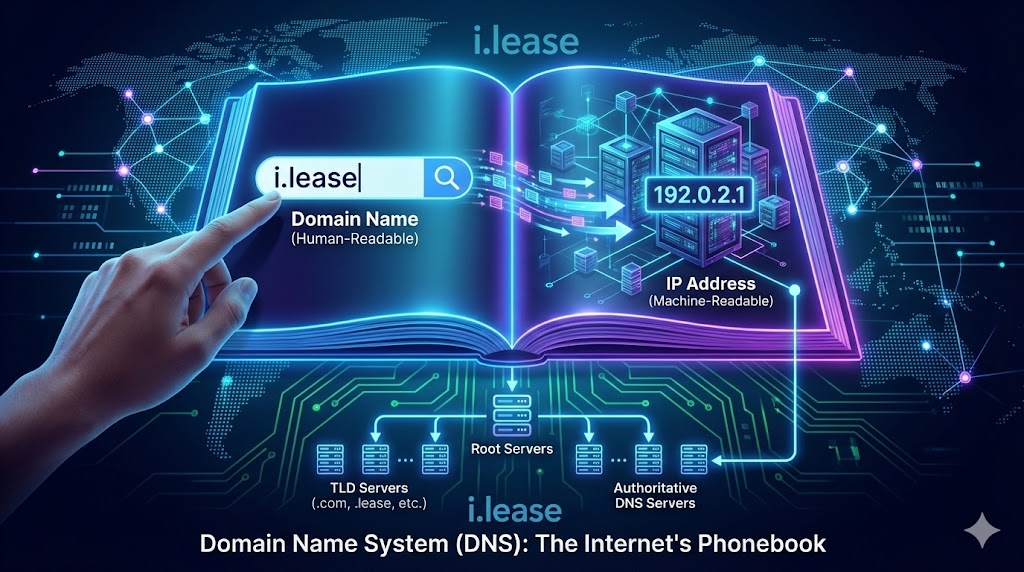
The Domain Name System (DNS) stands as a fundamental component that underpins seamless communication and accessibility across digital networks. While users navigate the internet using familiar domain names, such as google.com or facebook.com, behind the scenes, DNS quietly performs the vital task of translating these human-readable domain names into machine-readable IP addresses, facilitating the flow of data packets across the global network. Let’s unravel what DNS is and explore its role in enabling the World Wide Web.
Table of Contents
Roles of DNS: Translating Domain Names to IP Addresses
DNS serves as a distributed directory system that maps domain names to their corresponding IP addresses, allowing users to access websites, send emails, and communicate across the internet using familiar and meaningful identifiers.
This process, known as DNS resolution, involves a hierarchical structure of DNS servers, each responsible for a specific domain or zone, collectively forming the DNS hierarchy. When a user enters a domain name into a web browser or other network-enabled application, the DNS resolver queries the DNS infrastructure to obtain the corresponding IP address, enabling seamless connectivity and accessibility to online resources.
Understanding the DNS Hierarchy: Layers of Authority and Resolution
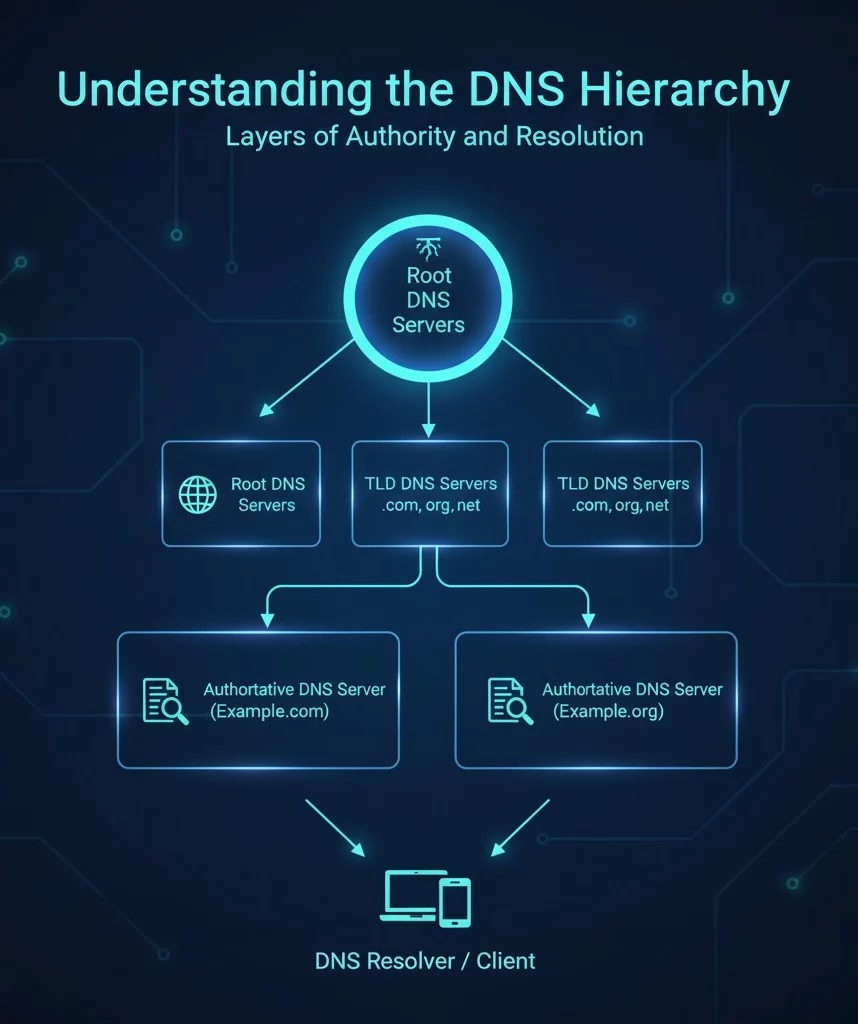
The DNS hierarchy consists of multiple layers of authority and resolution, each serving a specific role in the process of domain name resolution. At the top of the hierarchy are the root DNS servers, which maintain the authoritative records for the root zone of the DNS namespace. Underneath the root servers are the top-level domain (TLD) servers, responsible for managing domain names within specific TLDs such as .com, .org, or .net. Further down the hierarchy are the authoritative DNS servers, which maintain authoritative records for individual domain names or zones, providing resolution services to DNS resolvers and clients.
The Role of DNS Resolvers: Bridging Users and DNS Infrastructure
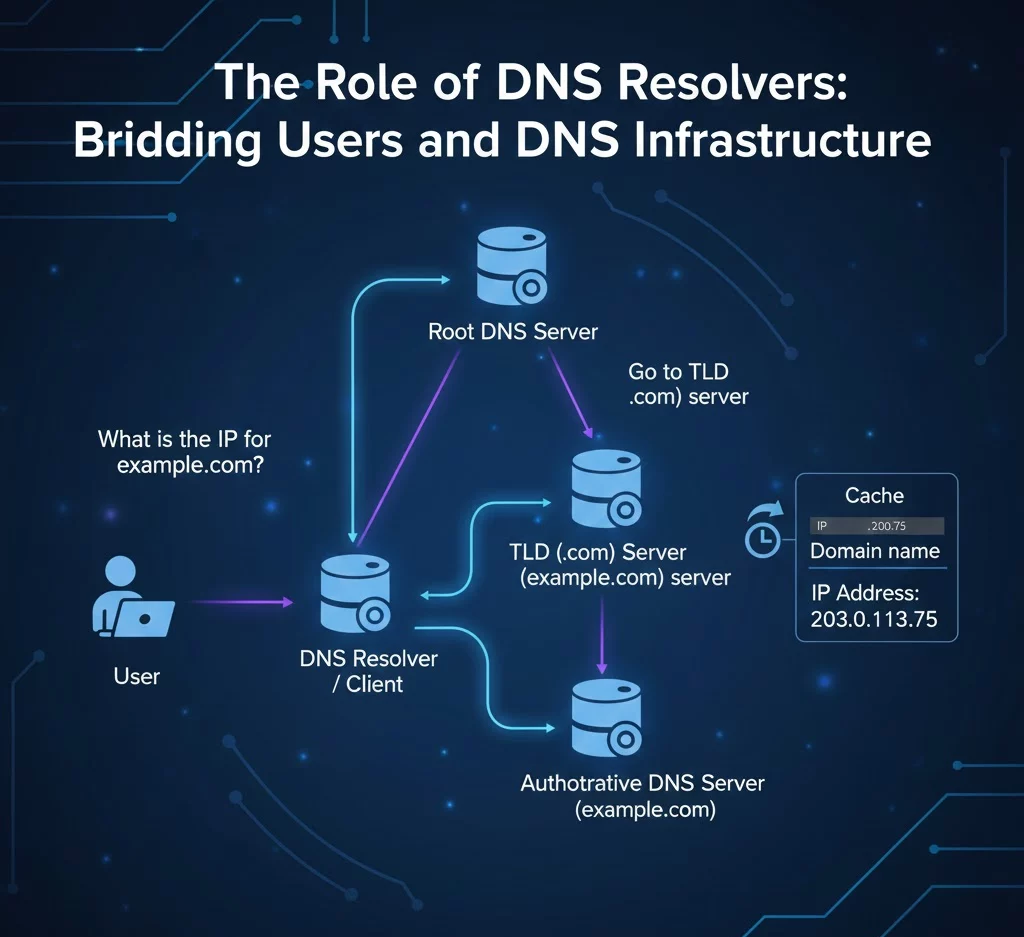
DNS resolvers, also known as recursive resolvers, play a crucial role in the DNS resolution process by acting as intermediaries between users and the DNS infrastructure. When a user initiates a DNS query by entering a domain name into a web browser, the resolver begins the resolution process by querying the root DNS servers to obtain the authoritative servers responsible for the requested domain.
Through iterative queries, the resolver traverses the DNS hierarchy, resolving domain names and obtaining the corresponding IP addresses until it reaches the authoritative server for the requested domain. Once the IP address is obtained, the resolver caches the result for future use, optimizing performance and reducing latency for subsequent queries.
DNS Security and Resilience: Mitigating Threats and Ensuring Reliability
In addition to facilitating domain name resolution, DNS plays a crucial role in ensuring the security and resilience of Internet communication. DNS security mechanisms, such as Domain Name System Security Extensions (DNSSEC), provide cryptographic authentication and integrity verification for DNS responses, mitigating the risk of DNS spoofing, cache poisoning, and other malicious attacks. Moreover, DNS employs redundancy and fault tolerance mechanisms, such as Anycast routing and DNS-based load balancing, to ensure the reliability and availability of DNS services, even in the face of network disruptions or targeted attacks.
Conclusion: Domain Name System's Functions in Internet Communication
In conclusion, the Domain Name System (DNS) serves as a cornerstone of Internet communication, enabling users to navigate the web using familiar domain names and facilitating seamless connectivity and accessibility across digital networks. Through its hierarchical structure, resolution process, and security mechanisms, DNS ensures the reliable and efficient translation of domain names to IP addresses, empowering individuals, businesses, and communities to harness the full potential of the interconnected world of cyberspace. As the internet continues to evolve and expand, the role of DNS remains indispensable, driving innovation and connectivity in the digital age.
Trusted IPv4 Leasing for Business Growth
Get enterprise-grade IPv4 space quickly, with seamless deployment and end-to-end management.
Get Started with i.leaseFAQs
Can changing my DNS server speed up my internet?
Yes, potentially. While DNS doesn’t increase your bandwidth (download speed), switching to a fast public DNS like Google (8.8.8.8) or Cloudflare (1.1.1.1) can resolve domain names faster than your ISP’s default server. This makes websites start loading sooner, making your browsing experience feel snappier.
What is the difference between an Authoritative and a Recursive DNS server?
-
Recursive Resolver: The “middleman” (usually your ISP) that goes out and finds the IP address for you.
-
Authoritative Server: The “final source of truth” that actually holds the specific IP record for a domain (e.g., the server holding the record for
google.com).
What is a DNS Leak?
A DNS leak happens when you are using a VPN to hide your location, but your computer accidentally sends DNS requests through your normal ISP instead of the VPN tunnel. This reveals your browsing history to your ISP, defeating the purpose of the VPN.
Related Posts

Risk Placement in IPv4 Transactions: What Enterprises Should Know
The IPv4 market has quietly evolved into a structured secondary asset class. As global IPv4 exhaustion continues, enterprises, ISPs, and brokers now routinely engage in buying, leasing, and transferring IPv4 address blocks. Alongside this growth, one topic has become increasingly important—but still under-discussed: risk placement in IPv4 transactions. For organizations participating in this market, especially through platforms such as i.lease, understanding how risk is identified, allocated, and mitigated isRead more Related Posts La Running-Code Primacy: por qué el arrendamiento de IPv4 debe juzgarse mediante pruebas operativas El arrendamiento de IPv4 suele comenzar con una pregunta simple: ¿Puede este proveedor darnos las direcciones? Pero para las empresas Read more Risques liés au renouvellement d’IPv4 : quand le manque de responsabilisation se transforme en trahison du code en cours d’exécution La plupart des entreprises entrent sur le marché IPv4 avec un objectif simple. Elles ont besoin d’adresses. Peut-être en ont-elles Read more Pourquoi la plupart des entreprises sont exposées accidentellement au risque d’échec d’attribution d’adresse IPv4 La rareté de l’IPv4 est largement comprise. Ce que de nombreuses entreprises sous-estiment encore, c’est le risque de continuité lié Read more .related-post {} .related-post .post-list { text-align: left; } .related-post .post-list .item { margin: 5px; padding: 10px; } .related-post .headline { font-size: 18px !important; color: #999999 !important; } .related-post .post-list .item .post_thumb { max-height: 220px; margin: 10px 0px; padding: 0px; display: block; } .related-post .post-list .item .post_title { font-size: 16px; color: #3f3f3f; margin: 10px 0px; padding: 0px; display: block; text-decoration: none; } .related-post .post-list .item .post_excerpt { font-size: 13px; color: #3f3f3f; margin: 10px 0px; padding: 0px; display: block; text-decoration: none; } @media only screen and (min-width: 1024px) { .related-post .post-list .item { width: 30%; } } @media only screen and (min-width: 768px) and (max-width: 1023px) { .related-post .post-list .item { width: 90%; } } @media only screen and (min-width: 0px) and (max-width: 767px) { .related-post .post-list .item { width: 90%; } }

Understanding Operational Risk in IPv4 Address Markets
IPv4 has long stopped being a simple technical identifier system. It has become a constrained, priced, and operationally embedded infrastructure asset class. “In the IPv4 market, execution is not paperwork. Execution is continuity under registry-layer uncertainty.”https://heng.lu/on-why-i-lease-exists-and-why-the-broker-question-is-really-a-registry-risk-question/ Yet most of the industry still speaks about it as if it were a straightforward marketplace problem: buyers, sellers, brokers, escrow, transfer, done. That framing is increasingly outdated. The real structure of riskRead more Related Posts La Running-Code Primacy: por qué el arrendamiento de IPv4 debe juzgarse mediante pruebas operativas El arrendamiento de IPv4 suele comenzar con una pregunta simple: ¿Puede este proveedor darnos las direcciones? Pero para las empresas Read more Risques liés au renouvellement d’IPv4 : quand le manque de responsabilisation se transforme en trahison du code en cours d’exécution La plupart des entreprises entrent sur le marché IPv4 avec un objectif simple. Elles ont besoin d’adresses. Peut-être en ont-elles Read more Pourquoi la plupart des entreprises sont exposées accidentellement au risque d’échec d’attribution d’adresse IPv4 La rareté de l’IPv4 est largement comprise. Ce que de nombreuses entreprises sous-estiment encore, c’est le risque de continuité lié Read more .related-post {} .related-post .post-list { text-align: left; } .related-post .post-list .item { margin: 5px; padding: 10px; } .related-post .headline { font-size: 18px !important; color: #999999 !important; } .related-post .post-list .item .post_thumb { max-height: 220px; margin: 10px 0px; padding: 0px; display: block; } .related-post .post-list .item .post_title { font-size: 16px; color: #3f3f3f; margin: 10px 0px; padding: 0px; display: block; text-decoration: none; } .related-post .post-list .item .post_excerpt { font-size: 13px; color: #3f3f3f; margin: 10px 0px; padding: 0px; display: block; text-decoration: none; } @media only screen and (min-width: 1024px) { .related-post .post-list .item { width: 30%; } } @media only screen and (min-width: 768px) and (max-width: 1023px) { .related-post .post-list .item { width: 90%; } } @media only screen and (min-width: 0px) and (max-width: 767px) { .related-post .post-list .item { width: 90%; } }

Why most enterprises are accidentally exposed to IPv4 allocation failure risk
IPv4 scarcity is widely understood. What many enterprises still underestimate is the continuity risk surrounding how address resources are governed and maintained. Enterprises often maintain operational use of IPv4 resources without full visibility into the continuity conditions supporting those allocations. The growing reliance on leasing, transfers, and provider-managed infrastructure is reshaping IPv4 Allocation into a long-term governance issue. IPv4 Allocation has quietly become a continuity issue For many enterpriseRead more Related Posts La Running-Code Primacy: por qué el arrendamiento de IPv4 debe juzgarse mediante pruebas operativas El arrendamiento de IPv4 suele comenzar con una pregunta simple: ¿Puede este proveedor darnos las direcciones? Pero para las empresas Read more Por qué la mayoría de las empresas están expuestas accidentalmente al riesgo de fallo en la asignación de IPv4 La escasez de IPv4 es ampliamente comprendida. Lo que muchas empresas aún subestiman es el riesgo de continuidad relacionado con Read more Riesgo de renovación de IPv4: Cuando la falta de rendición de cuentas se convierte en traición al código en ejecución ¿Quién es realmente responsable de mantener vivo este acceso IPv4? No quién lo vendió.No quién lo presentó.No quién emitió la Read more .related-post {} .related-post .post-list { text-align: left; } .related-post .post-list .item { margin: 5px; padding: 10px; } .related-post .headline { font-size: 18px !important; color: #999999 !important; } .related-post .post-list .item .post_thumb { max-height: 220px; margin: 10px 0px; padding: 0px; display: block; } .related-post .post-list .item .post_title { font-size: 16px; color: #3f3f3f; margin: 10px 0px; padding: 0px; display: block; text-decoration: none; } .related-post .post-list .item .post_excerpt { font-size: 13px; color: #3f3f3f; margin: 10px 0px; padding: 0px; display: block; text-decoration: none; } @media only screen and (min-width: 1024px) { .related-post .post-list .item { width: 30%; } } @media only screen and (min-width: 768px) and (max-width: 1023px) { .related-post .post-list .item { width: 90%; } } @media only screen and (min-width: 0px) and (max-width: 767px) { .related-post .post-list .item { width: 90%; } }
