Why Subnetting Is Important for Network Management
 Stephanie
The Role of Subnetting in Modern Networks
Table of Contents
Subnetting means splitting a large IP network into smaller parts. It is very important for network management. It lets administrators give IP addresses carefully. This reduces waste and stops conflicts. Subnetting also helps organise networks in a clear way. Today, many devices connect to networks. Without subnets, networks can become messy. Subnetting makes networks easier to control.
Subnetting started when the internet had fewer IP addresses. Engineers needed a way to use addresses without running out. They cut big blocks of addresses into smaller groups. Each group has its own network ID and host addresses. This idea is still important now. Even with IPv6, which has more addresses, subnetting keeps networks structured and safe. It also makes it easier to grow networks later.
For network managers, subnetting has many benefits. It helps use addresses well and keeps routing tables simple. This lowers delay and saves bandwidth. Clear subnets also make it easier to apply security rules, control resources, and watch traffic. Each subnet can serve a department, location, or app. This makes problems easier to fix and adding new devices easier.
Subnetting also helps follow rules and laws. Many organisations must keep data separate for security. Subnets can separate sensitive information, like financial or personal data. This makes it easier to control access and keep records. If there is an audit, clear subnets show good management. Subnetting is not only technical; it helps manage risks and follow rules.
Improving Network Performance
Network performance is very important. Subnetting helps networks run faster. Many devices in one network create too much traffic. This can slow down communication. Breaking the network into subnets reduces this traffic. Devices get messages only when needed. This lowers delays and makes the network smoother.
Subnetting also helps routers work better. Routers use subnet info to send data efficiently. Smaller subnets keep routing tables short. Short tables let routers work faster. A network with subnets handles traffic better when it grows.
Subnetting makes it easy to expand networks. Adding new offices or apps is simple with subnets. Each new subnet can have enough addresses without changing the old network. This keeps the network stable and fast.
Security improves too. Traffic in a subnet can be watched closely. Firewalls can control each subnet separately. If a subnet is attacked, the problem is contained. This stops attacks from spreading. Subnets help protect critical data and reduce risks.
Security and Compliance Benefits
Subnetting also keeps networks safer. Each department or function can have its own subnet. If one subnet is attacked, others stay safe. For example, a guest Wi-Fi subnet can be separate from internal servers. This keeps important data safe.
Subnetting makes rules easier to manage. Instead of controlling each device, admins can set rules for the subnet. This saves time and keeps security consistent. Each subnet can need its own login. This limits attackers and keeps networks safer.
Subnetting also helps follow laws. Rules like GDPR or PCI DSS need data control. Subnets make it clear where sensitive data is. Logs and audits are easier because traffic is in separate segments. If something goes wrong, it is easier to check the problem in one subnet.
Subnetting also helps respond to problems quickly. If a threat appears, the subnet can be isolated without stopping the whole network. This keeps other devices running. Combined with monitoring tools, subnetting helps fix problems fast and reduce data loss.
Planning Networks for the Future
Subnetting is part of network planning. Good planning needs knowing the company’s needs and network setup. Admins should check department size, location, apps, and security rules. Planning ensures each subnet has enough addresses and avoids waste.
Documentation is important. Keeping records of subnets, routes, and security rules helps fix problems. It also helps plan upgrades. Networks are more complex now with cloud, remote work, and IoT devices. Clear records guide decisions and prevent mistakes.
Training and teamwork are needed. Network engineers, security staff, and managers should understand the subnets. Regular checks find unused addresses and problems. Automation tools can help assign addresses and watch usage. This reduces mistakes and alerts admins to issues early.
Subnetting will stay important as technology changes. IPv6, software-defined networks, and cloud setups still need good structure. Networks of any type benefit from subnetting. It keeps networks fast, safe, and easy to grow. Subnetting is a basic tool for long-term success.
Trusted IPv4 Leasing for Business Growth
Get enterprise-grade IPv4 space quickly, with seamless deployment and end-to-end management.
Get Started with i.leaseFAQs
What is subnetting in simple words?
Subnetting is splitting a large network into smaller sections called subnets. Each subnet has its own addresses. This makes networks easier to manage.
Why do networks need subnetting?
Subnetting helps organise networks, reduce traffic problems, improve security, and plan for growth. It makes networks run better.
Is subnetting still needed with IPv6?
Yes. Even with many addresses, subnetting keeps networks organised, safe, and easier to control.
How does subnetting make networks safer?
Subnetting separates departments and functions. If one subnet is attacked, others are safe. It also helps control firewalls and watch traffic.
What should I think about when making subnets?
Consider the number of devices, growth plans, location, apps, and security needs. Good planning ensures each subnet has enough addresses.
Related Blogs
Related Posts
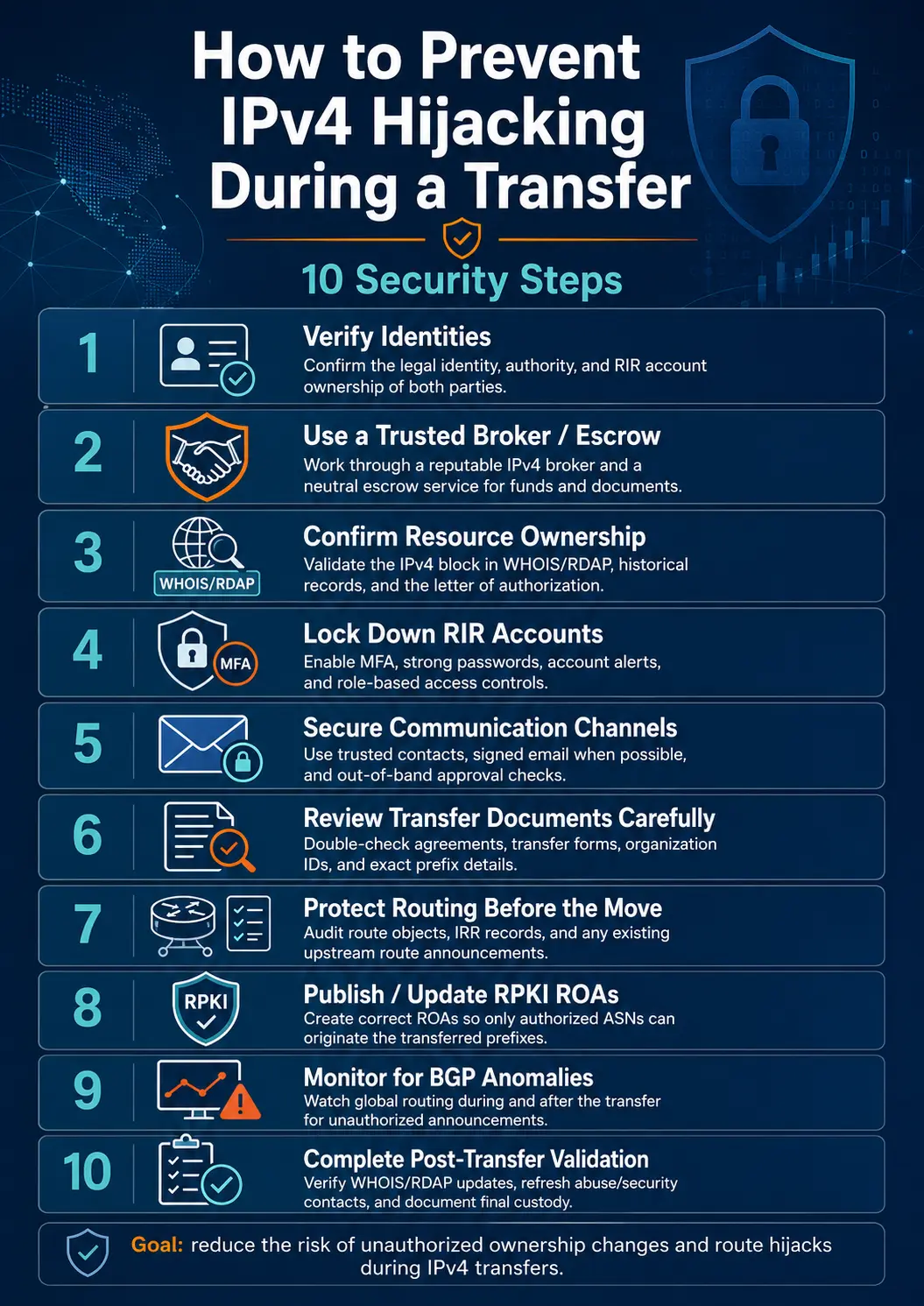
How to Prevent IPv4 Hijacking During a Transfer: 10 Security Steps
Transferring IPv4 address space is not only a commercial and registry process. It is also a sensitive routing operation. During an IPv4 transfer, control of a prefix moves from one organization to another. Registry records, Route Origin Authorizations, Internet Routing Registry objects, upstream-provider filters, reverse DNS settings, and live BGP announcements may all need to change. When these changes are completed in the wrong order—or when identity and authorizationRead more Related Posts How to Prevent IPv4 Hijacking During a Transfer: 10 Security Steps Transferring IPv4 address space is not only a commercial and registry process. It is also a sensitive routing operation. During Why the Cheapest IPv4 Lease May Cost More in the Long Run A low monthly price may look attractive during procurement, but the real cost of leased IPv4 addresses includes much more What Is a /24 IPv4 Subnet and Why Is It Popular for Leasing? A /24 IPv4 subnet is one of the most common block sizes in the IPv4 leasing market. For hosting providers, .related-post {} .related-post .post-list { text-align: left; } .related-post .post-list .item { margin: 5px; padding: 10px; } .related-post .headline { font-size: 18px !important; color: #999999 !important; } .related-post .post-list .item .post_thumb { max-height: 220px; margin: 10px 0px; padding: 0px; display: block; } .related-post .post-list .item .post_title { font-size: 16px; color: #3f3f3f; margin: 10px 0px; padding: 0px; display: block; text-decoration: none; } .related-post .post-list .item .post_excerpt { font-size: 13px; color: #3f3f3f; margin: 10px 0px; padding: 0px; display: block; text-decoration: none; } @media only screen and (min-width: 1024px) { .related-post .post-list .item { width: 30%; } } @media only screen and (min-width: 768px) and (max-width: 1023px) { .related-post .post-list .item { width: 90%; } } @media only screen and (min-width: 0px) and (max-width: 767px) { .related-post .post-list .item { width: 90%; } }
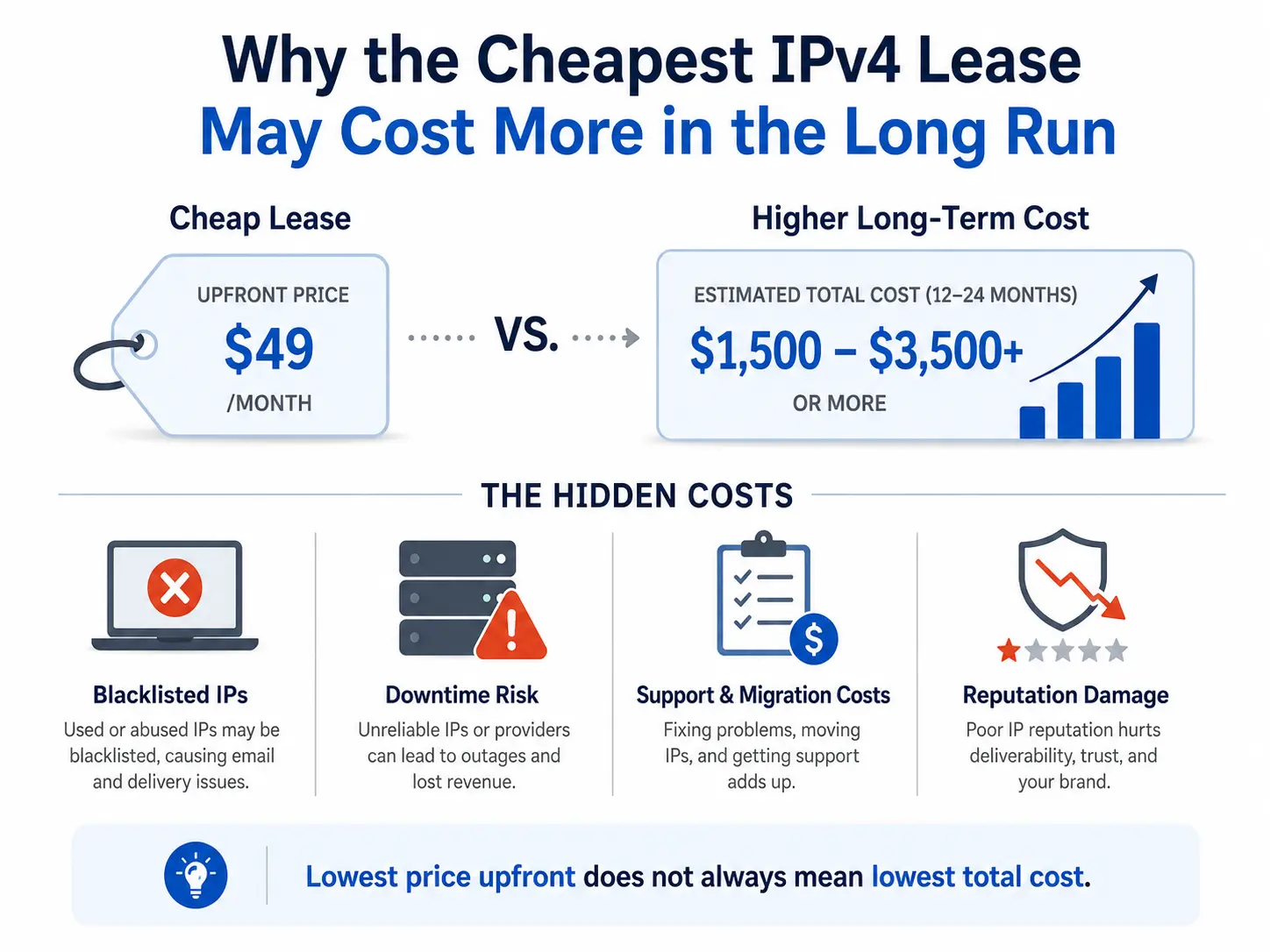
Why the Cheapest IPv4 Lease May Cost More in the Long Run
A low monthly price may look attractive during procurement, but the real cost of leased IPv4 addresses includes much more than the advertised rate. Poor IP reputation, incomplete routing authorisation, deployment delays, weak technical support, incorrect geolocation and uncertain renewal terms can quickly erase the initial saving. For testing or short-lived projects, a basic low-cost IPv4 lease may be sufficient. For production networks, however, businesses should evaluate the totalRead more Related Posts How to Prevent IPv4 Hijacking During a Transfer: 10 Security Steps Transferring IPv4 address space is not only a commercial and registry process. It is also a sensitive routing operation. During Why the Cheapest IPv4 Lease May Cost More in the Long Run A low monthly price may look attractive during procurement, but the real cost of leased IPv4 addresses includes much more What Is a /24 IPv4 Subnet and Why Is It Popular for Leasing? A /24 IPv4 subnet is one of the most common block sizes in the IPv4 leasing market. For hosting providers, .related-post {} .related-post .post-list { text-align: left; } .related-post .post-list .item { margin: 5px; padding: 10px; } .related-post .headline { font-size: 18px !important; color: #999999 !important; } .related-post .post-list .item .post_thumb { max-height: 220px; margin: 10px 0px; padding: 0px; display: block; } .related-post .post-list .item .post_title { font-size: 16px; color: #3f3f3f; margin: 10px 0px; padding: 0px; display: block; text-decoration: none; } .related-post .post-list .item .post_excerpt { font-size: 13px; color: #3f3f3f; margin: 10px 0px; padding: 0px; display: block; text-decoration: none; } @media only screen and (min-width: 1024px) { .related-post .post-list .item { width: 30%; } } @media only screen and (min-width: 768px) and (max-width: 1023px) { .related-post .post-list .item { width: 90%; } } @media only screen and (min-width: 0px) and (max-width: 767px) { .related-post .post-list .item { width: 90%; } }
What causes IPv4 deals to stall after the first agreement
IPv4 deals usually stall after the first agreement because agreeing on price is only the commercial beginning—not operational completion. A buyer and seller may agree on a block and price within hours, but the transaction can still be delayed by unclear ownership, incomplete documents, mismatched Regional Internet Registry requirements, recipient eligibility, reputation concerns, payment conditions, or missing routing authorization. The most common causes are: The seller’s authority over theRead more Related Posts How to Prevent IPv4 Hijacking During a Transfer: 10 Security Steps Transferring IPv4 address space is not only a commercial and registry process. It is also a sensitive routing operation. During Why the Cheapest IPv4 Lease May Cost More in the Long Run A low monthly price may look attractive during procurement, but the real cost of leased IPv4 addresses includes much more What Is a /24 IPv4 Subnet and Why Is It Popular for Leasing? A /24 IPv4 subnet is one of the most common block sizes in the IPv4 leasing market. For hosting providers, .related-post {} .related-post .post-list { text-align: left; } .related-post .post-list .item { margin: 5px; padding: 10px; } .related-post .headline { font-size: 18px !important; color: #999999 !important; } .related-post .post-list .item .post_thumb { max-height: 220px; margin: 10px 0px; padding: 0px; display: block; } .related-post .post-list .item .post_title { font-size: 16px; color: #3f3f3f; margin: 10px 0px; padding: 0px; display: block; text-decoration: none; } .related-post .post-list .item .post_excerpt { font-size: 13px; color: #3f3f3f; margin: 10px 0px; padding: 0px; display: block; text-decoration: none; } @media only screen and (min-width: 1024px) { .related-post .post-list .item { width: 30%; } } @media only screen and (min-width: 768px) and (max-width: 1023px) { .related-post .post-list .item { width: 90%; } } @media only screen and (min-width: 0px) and (max-width: 767px) { .related-post .post-list .item { width: 90%; } }
