Why Is There No IPv5? Story Behind the Missing Internet Protocol
 Chan
Chan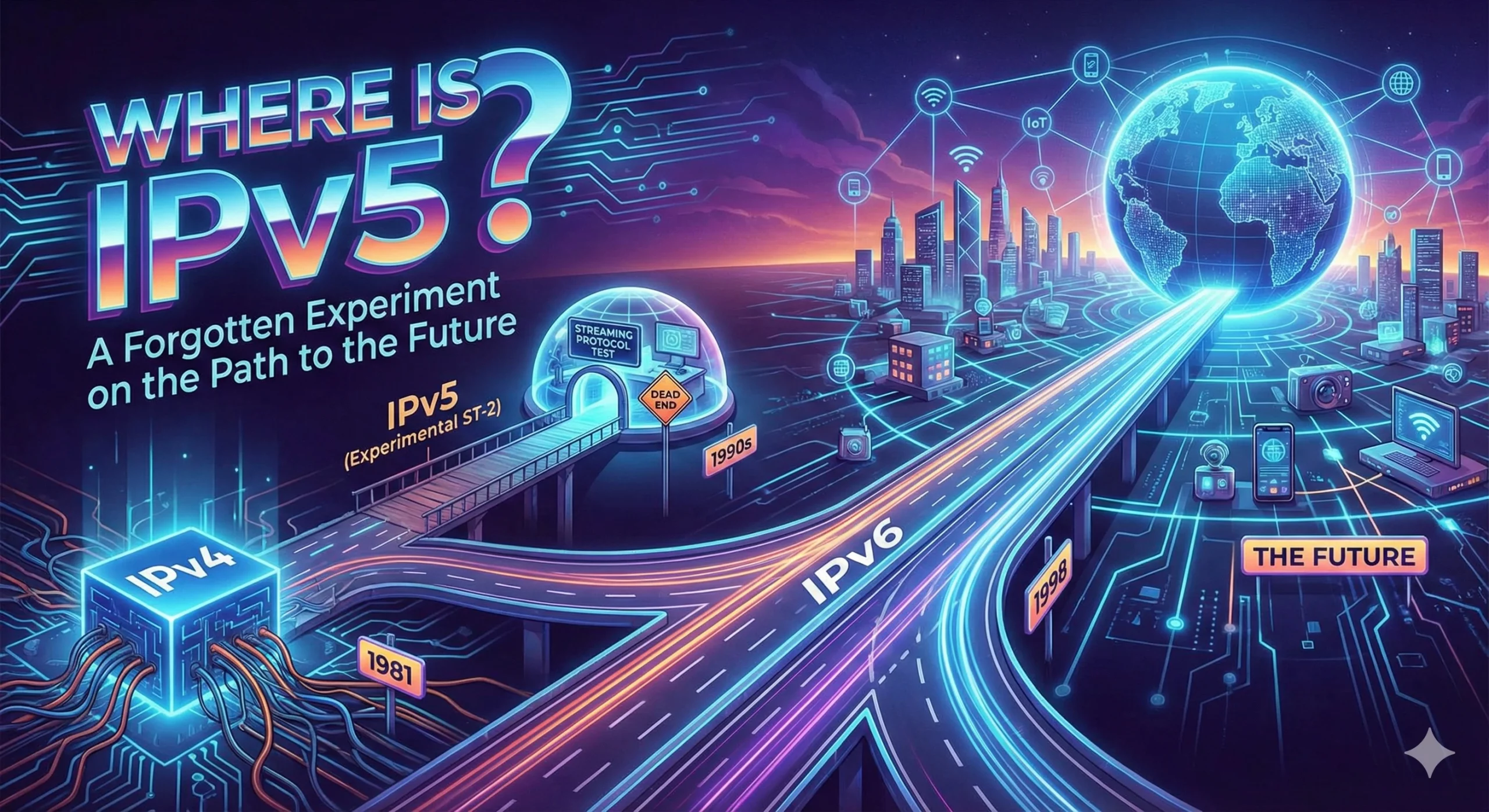
When discussing Internet Protocols, most people are familiar with IPv4 and IPv6. But you might wonder: What happened to IPv5? Why does it seem like the Internet skipped from IPv4 to IPv6? Let’s dive into the fascinating history behind this “missing” protocol.
Table of Contents
What Is IPv5?
IPv5, officially known as the Internet Stream Protocol (ST), was an experimental protocol developed in the late 1970s and 1980s. It was designed to support real-time multimedia data streaming like voice and video over IP networks. Unlike IPv4, which operates on a connectionless basis, IPv5 aimed to create a connection-oriented communication system for better multimedia performance.
Why Didn’t IPv5 Become the Next Main Internet Protocol?
Despite its innovative intent, IPv5 was never widely adopted. Here’s why:
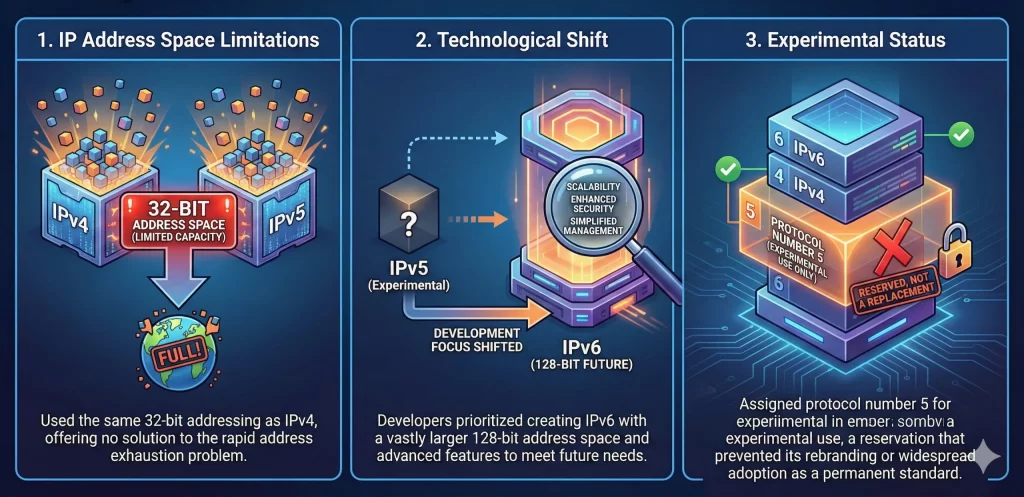
1. IP Address Space Limitations
IPv5 used the same 32-bit address space as IPv4. With the rapid growth of the Internet, IPv4 address exhaustion became a critical issue, making IPv5’s addressing system equally inadequate for future needs.
2. Technological Shift
As the need for a more scalable solution grew, developers focused on creating IPv6, which introduced 128-bit addressing, solving the problem of address shortages, and adding enhanced features like built-in security and simplified network management.
3. Experimental Status
IPv5 was never intended as a long-term replacement for IPv4. It was assigned the protocol number 5 for experimental use, and this reservation in the protocol stack meant it couldn’t later be rebranded as a future version of IP.
Why IPv6 Replaced IPv4 (and Not IPv5)
IPv6 was designed as a comprehensive upgrade to IPv4, addressing limitations like address shortages and improving the efficiency of Internet communication. It became the standard protocol for modern networking needs, leaving IPv5 as an interesting footnote in Internet history.
IPv5: A Stepping Stone in Internet Protocol Development
Though IPv5 was never widely implemented, it played a significant role in shaping the development of Internet protocols. Its experimentation with multimedia streaming paved the way for technologies we now take for granted, like VoIP (Voice over IP) and real-time video conferencing.
Why Businesses Choose i.lease for Leasing IP Addresses?
For businesses that need IPv4 leasing, buying, or selling support, i.lease provides structured IPv4 access backed by LARUS operational experience.
i.lease helps businesses lease IPv4 addresses with a continuity-first approach. Instead of treating IPv4 as a simple monthly rental, i.lease focuses on source clarity, routing support, renewal accountability, clean IP reputation, and operational reliability.
Conclusion
So, while there is no “missing” protocol, IPv5 is a testament to the trial-and-error process that drives technological innovation. It’s a reminder that every step, even experimental ones, contributes to the digital landscape we enjoy today.
Also Read: About IPv6: Benefits, Adoption & IPv4 Transition Planning
Also Read: Lease IP Address: How IPv4 Leasing Works
FAQs
Was IPv5 ever used?
Yes, but only as an experimental protocol for multimedia streaming applications. It was never widely adopted.
Why was IPv5 skipped?
It wasn’t skipped—it was used experimentally. However, its limitations, like 32-bit addressing, made it unsuitable for long-term adoption.
What makes IPv6 better?
IPv6 offers 128-bit addressing, better security, and simplified routing, solving issues IPv4 and IPv5 couldn’t address.
Related Posts
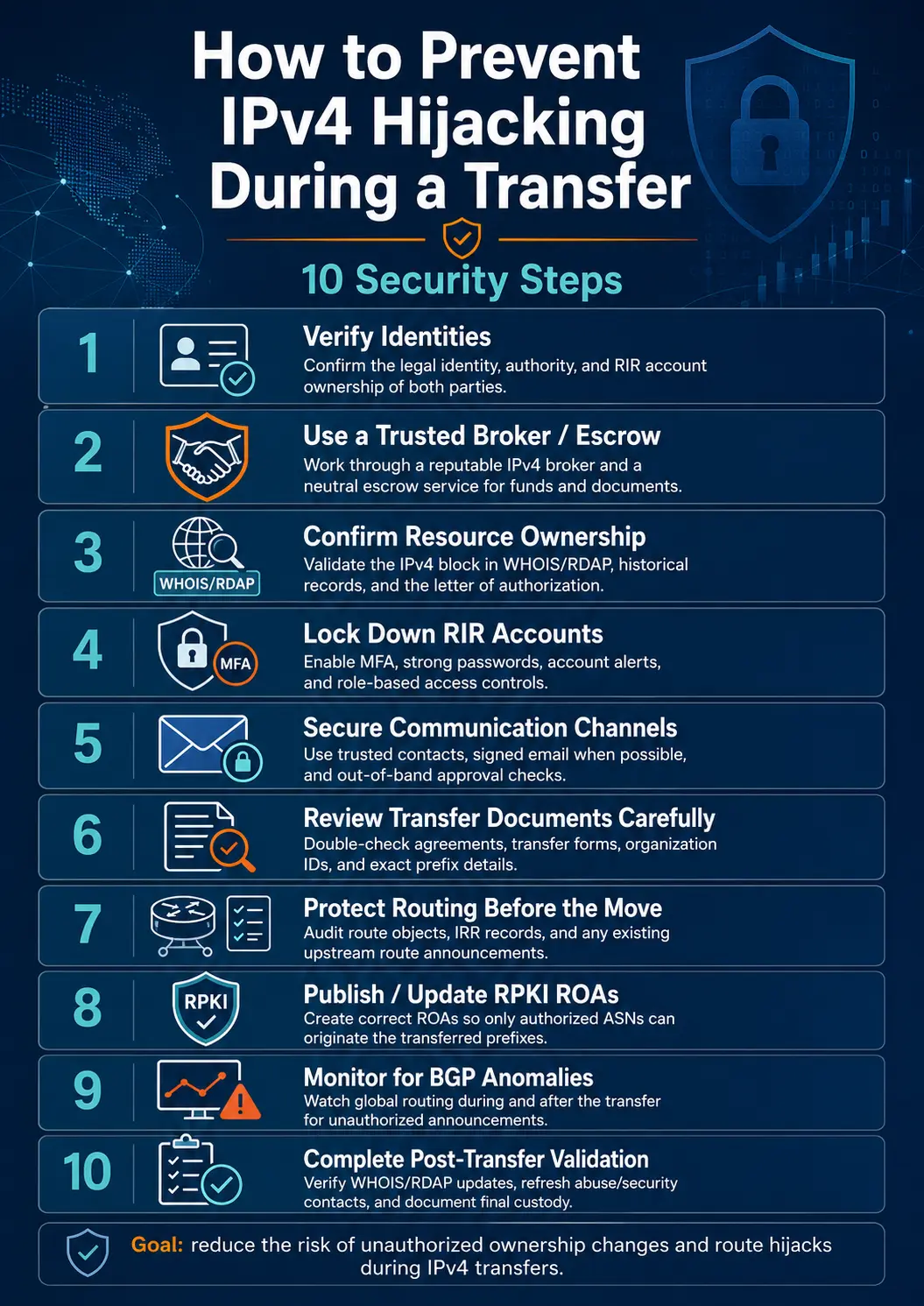
How to Prevent IPv4 Hijacking During a Transfer: 10 Security Steps
Transferring IPv4 address space is not only a commercial and registry process. It is also a sensitive routing operation. During an IPv4 transfer, control of a prefix moves from one organization to another. Registry records, Route Origin Authorizations, Internet Routing Registry objects, upstream-provider filters, reverse DNS settings, and live BGP announcements may all need to change. When these changes are completed in the wrong order—or when identity and authorizationRead more Related Posts How to Prevent IPv4 Hijacking During a Transfer: 10 Security Steps Transferring IPv4 address space is not only a commercial and registry process. It is also a sensitive routing operation. During Why the Cheapest IPv4 Lease May Cost More in the Long Run A low monthly price may look attractive during procurement, but the real cost of leased IPv4 addresses includes much more What Is a /24 IPv4 Subnet and Why Is It Popular for Leasing? A /24 IPv4 subnet is one of the most common block sizes in the IPv4 leasing market. For hosting providers, .related-post {} .related-post .post-list { text-align: left; } .related-post .post-list .item { margin: 5px; padding: 10px; } .related-post .headline { font-size: 18px !important; color: #999999 !important; } .related-post .post-list .item .post_thumb { max-height: 220px; margin: 10px 0px; padding: 0px; display: block; } .related-post .post-list .item .post_title { font-size: 16px; color: #3f3f3f; margin: 10px 0px; padding: 0px; display: block; text-decoration: none; } .related-post .post-list .item .post_excerpt { font-size: 13px; color: #3f3f3f; margin: 10px 0px; padding: 0px; display: block; text-decoration: none; } @media only screen and (min-width: 1024px) { .related-post .post-list .item { width: 30%; } } @media only screen and (min-width: 768px) and (max-width: 1023px) { .related-post .post-list .item { width: 90%; } } @media only screen and (min-width: 0px) and (max-width: 767px) { .related-post .post-list .item { width: 90%; } }
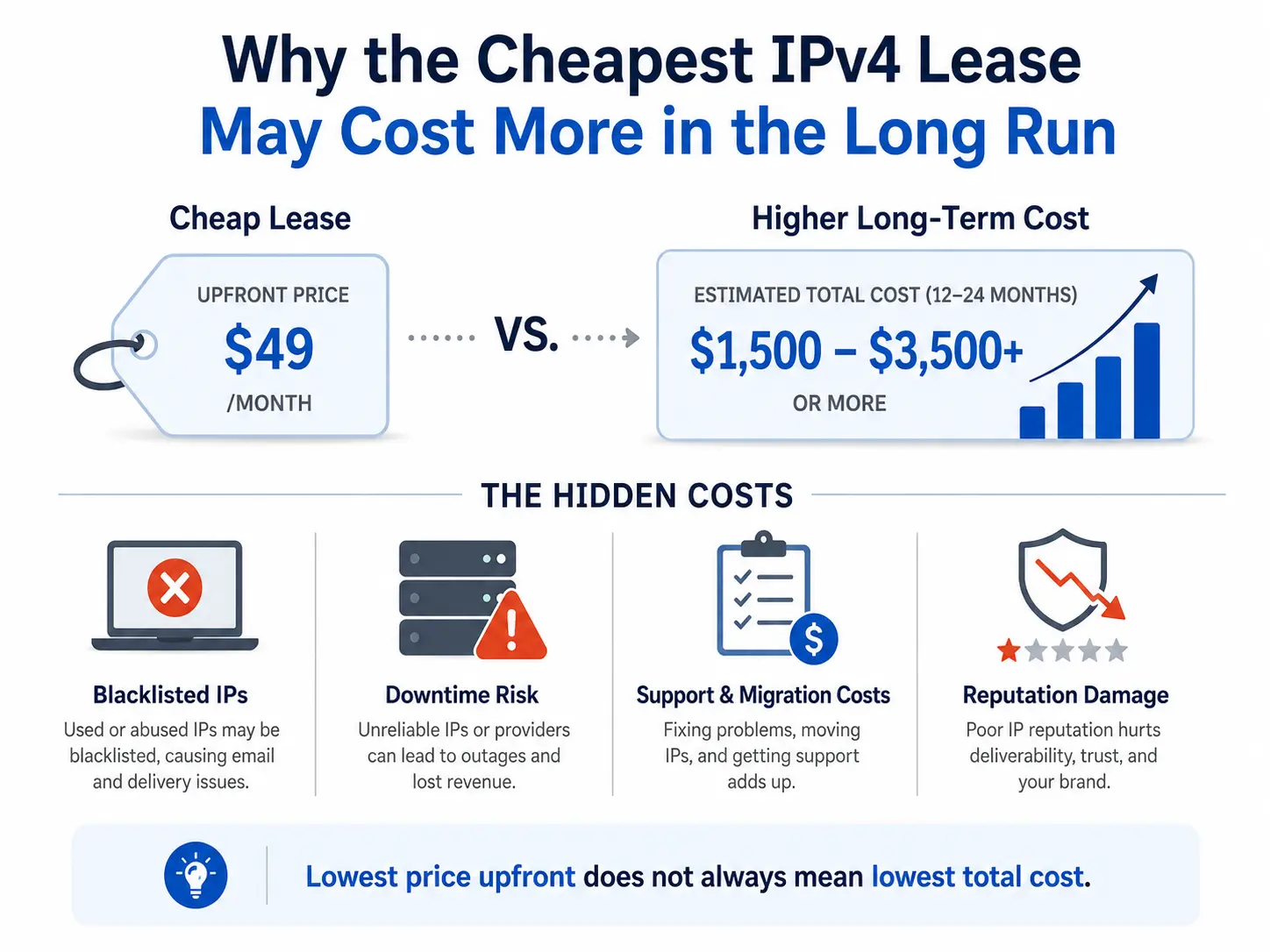
Why the Cheapest IPv4 Lease May Cost More in the Long Run
A low monthly price may look attractive during procurement, but the real cost of leased IPv4 addresses includes much more than the advertised rate. Poor IP reputation, incomplete routing authorisation, deployment delays, weak technical support, incorrect geolocation and uncertain renewal terms can quickly erase the initial saving. For testing or short-lived projects, a basic low-cost IPv4 lease may be sufficient. For production networks, however, businesses should evaluate the totalRead more Related Posts How to Prevent IPv4 Hijacking During a Transfer: 10 Security Steps Transferring IPv4 address space is not only a commercial and registry process. It is also a sensitive routing operation. During Why the Cheapest IPv4 Lease May Cost More in the Long Run A low monthly price may look attractive during procurement, but the real cost of leased IPv4 addresses includes much more What Is a /24 IPv4 Subnet and Why Is It Popular for Leasing? A /24 IPv4 subnet is one of the most common block sizes in the IPv4 leasing market. For hosting providers, .related-post {} .related-post .post-list { text-align: left; } .related-post .post-list .item { margin: 5px; padding: 10px; } .related-post .headline { font-size: 18px !important; color: #999999 !important; } .related-post .post-list .item .post_thumb { max-height: 220px; margin: 10px 0px; padding: 0px; display: block; } .related-post .post-list .item .post_title { font-size: 16px; color: #3f3f3f; margin: 10px 0px; padding: 0px; display: block; text-decoration: none; } .related-post .post-list .item .post_excerpt { font-size: 13px; color: #3f3f3f; margin: 10px 0px; padding: 0px; display: block; text-decoration: none; } @media only screen and (min-width: 1024px) { .related-post .post-list .item { width: 30%; } } @media only screen and (min-width: 768px) and (max-width: 1023px) { .related-post .post-list .item { width: 90%; } } @media only screen and (min-width: 0px) and (max-width: 767px) { .related-post .post-list .item { width: 90%; } }
What causes IPv4 deals to stall after the first agreement
IPv4 deals usually stall after the first agreement because agreeing on price is only the commercial beginning—not operational completion. A buyer and seller may agree on a block and price within hours, but the transaction can still be delayed by unclear ownership, incomplete documents, mismatched Regional Internet Registry requirements, recipient eligibility, reputation concerns, payment conditions, or missing routing authorization. The most common causes are: The seller’s authority over theRead more Related Posts How to Prevent IPv4 Hijacking During a Transfer: 10 Security Steps Transferring IPv4 address space is not only a commercial and registry process. It is also a sensitive routing operation. During Why the Cheapest IPv4 Lease May Cost More in the Long Run A low monthly price may look attractive during procurement, but the real cost of leased IPv4 addresses includes much more What Is a /24 IPv4 Subnet and Why Is It Popular for Leasing? A /24 IPv4 subnet is one of the most common block sizes in the IPv4 leasing market. For hosting providers, .related-post {} .related-post .post-list { text-align: left; } .related-post .post-list .item { margin: 5px; padding: 10px; } .related-post .headline { font-size: 18px !important; color: #999999 !important; } .related-post .post-list .item .post_thumb { max-height: 220px; margin: 10px 0px; padding: 0px; display: block; } .related-post .post-list .item .post_title { font-size: 16px; color: #3f3f3f; margin: 10px 0px; padding: 0px; display: block; text-decoration: none; } .related-post .post-list .item .post_excerpt { font-size: 13px; color: #3f3f3f; margin: 10px 0px; padding: 0px; display: block; text-decoration: none; } @media only screen and (min-width: 1024px) { .related-post .post-list .item { width: 30%; } } @media only screen and (min-width: 768px) and (max-width: 1023px) { .related-post .post-list .item { width: 90%; } } @media only screen and (min-width: 0px) and (max-width: 767px) { .related-post .post-list .item { width: 90%; } }
